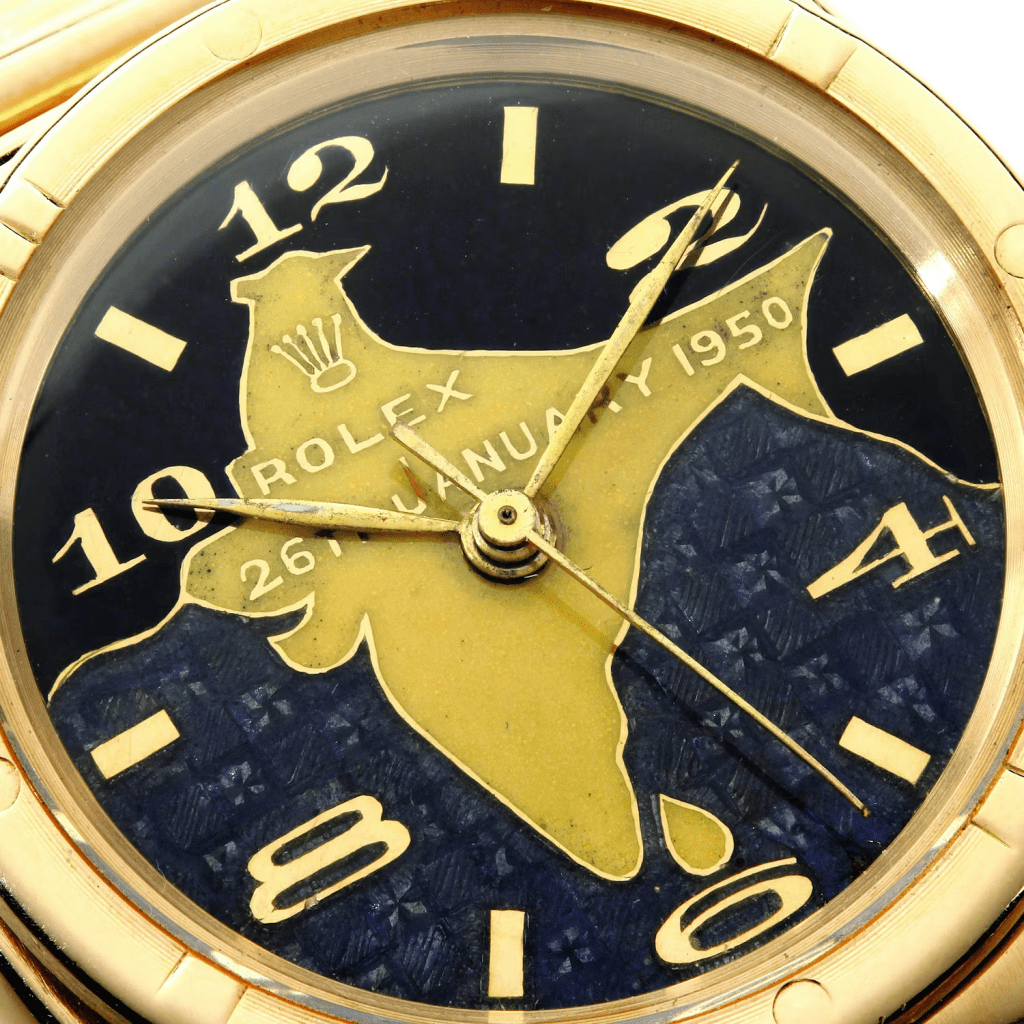
As India celebrates its 75th Republic Day, we explore the history of two most coveted timepieces of modern Indian history.
Rolex came to India in 1920’s when P. Orr & Sons, Madras sold the country’s first watch from the brand for a sum of Rs 198. The brand subsequently expanded its presence in the subcontinent with prominent retailers taking it up for sale in major cities/trade hubs across the subcontinent.
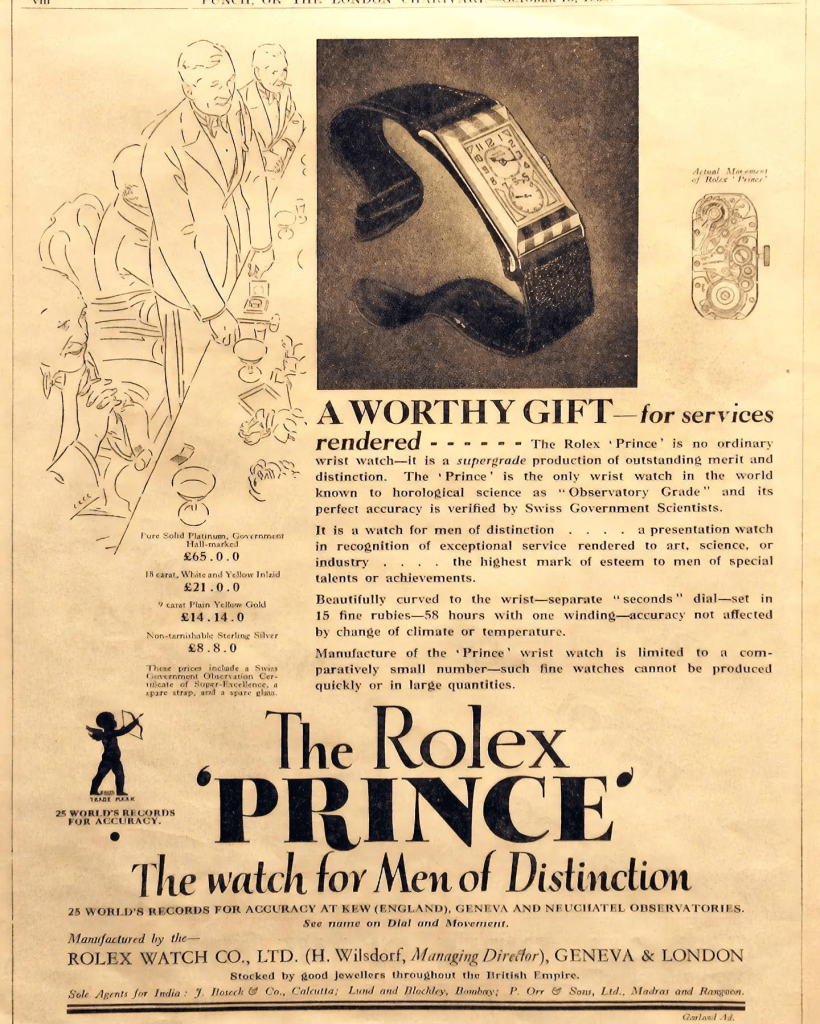
P. Orr & Sons in Madras and Rangoon, Cooke & Kelvey and J. Boseck & Co. in Calcutta and Delhi with Marcks & Co. in Bombay and Poona and Cargills in Ceylon (Sri Lanka) – some prominent retailers of Rolex in India.
Courtesy of @ovmilosz & @kittyvolante.
The watches soon became a favorite amongst the officers of the British Army and the likeness soon spread amongst the govt. and the maharajas courts. These watches were extensively used throughout campaigns during the Second World War. This was the epitome of double-signed dials.

Examples of WW2 Rolexes retailed by above mentioned retailers.
Pictures: @roni_m_29 & ABlogToWatch.
Republic Day
At the stroke of midnight at 12 midnight on August 14, 1947, Jawaharlal Nehru delivered his historic speech “Tryst With Destiny” speech and took oath as the first prime minister of independent India. How independent? That’s controversial.
Although India became a free nation on August 15, 1947, it declared itself a Sovereign, Democratic and Republic state with the adoption of its Constitution, two years later on January 26, 1950.

A salute of 21 guns and the unfurling of the Indian National Flag by then president Dr. Rajendra Prasad heralded the historic birth of the Indian Republic on that day. Thereafter 26th of January was decreed a national holiday and was recognized as the Republic Day of India.
The Constitution gave the citizens of India the power to choose their own government and paved the way for democracy. Dr. Rajendra Prasad took oath as the first President of India at the Durbar Hall in Government House -now Rashtrapati Bhawan and declared India a Republic.
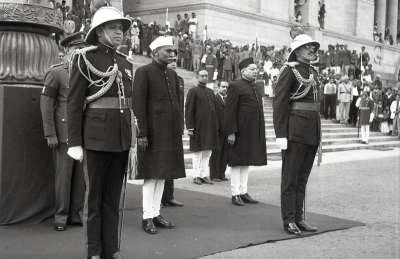
This was important as it gave the nation a rulebook to guide its law and define a way of governance. It was indeed a remarkable & historic day. To make it memorable, etched in the minds of those who headed the nation, two Rolexes were commissioned in the memory the day.
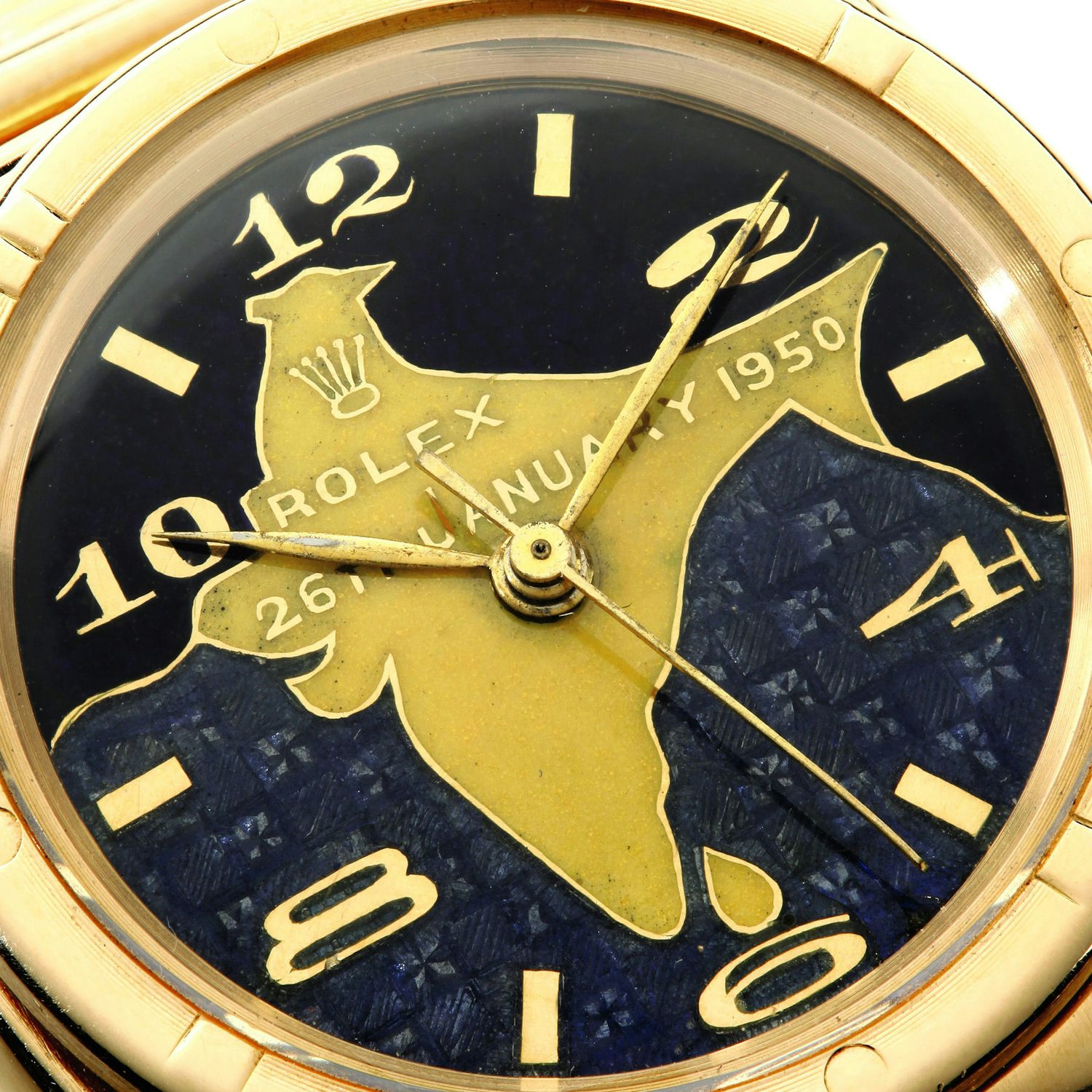
In late 1949, two 18k gold Rolexes, one each for the two state-heads, with custom cloisonne dials were commissioned to mark the historic day by then Prime Minister Jawaharlal Nehru. Whose idea was it is still debatable, but it had been Shri Nehru.

The dials were made by Marcks & Co, Bombay, a prominent Rolex agent in Bombay.
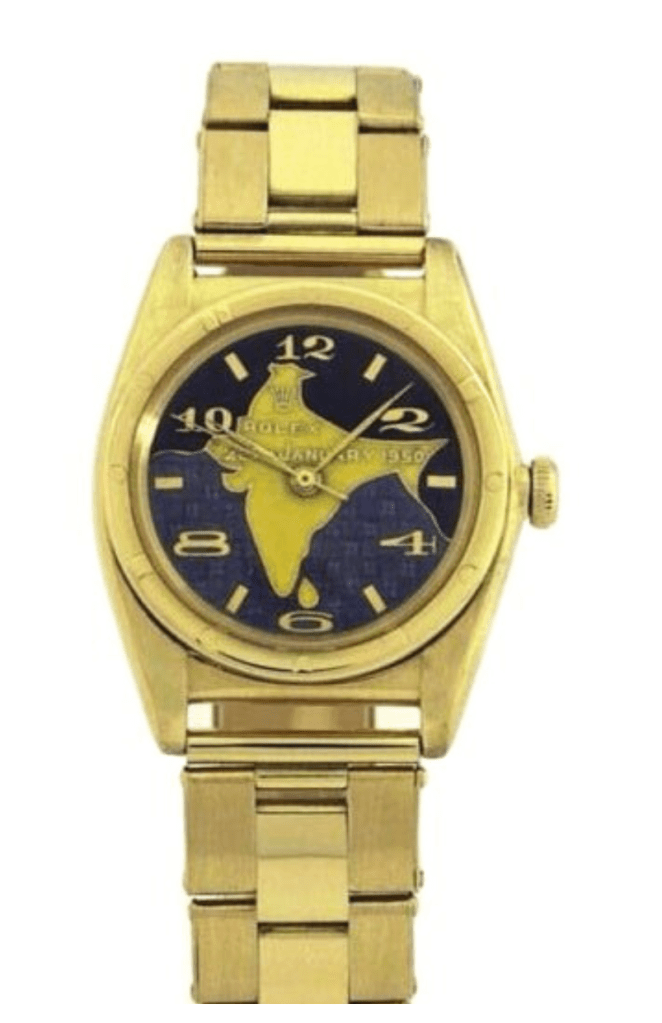
The dials were set on Rolex Oyster Perpetual Ref. 3372 in pink/yellow gold. While both watches came on similar gold bracelet, Nehru choose to wear his on a leather strap.

A similar Rolex Oyster Perpetual Ref. 3372 “Bubbleback” in its stock form.
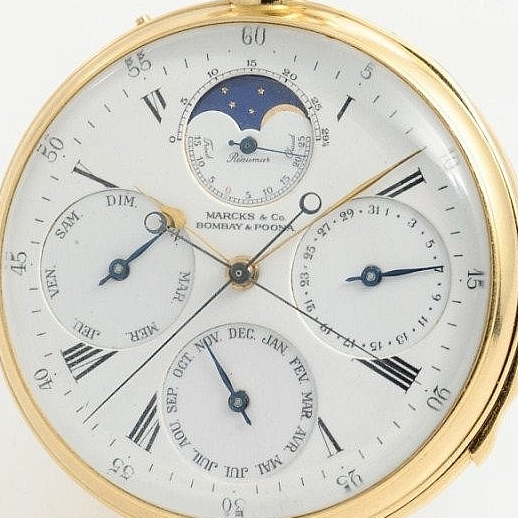
Marcks & Co. based in Bombay & Poona are mostly associated with Maharajah Watches, known for their highly complicated and ornate pocket watches decorated with sophisticated enamel and diamond settings, specially made for maharajas of the Indian subcontinent. They were the go-to choice for complication watches and enamel decorations, trusted by the Nizams and Maharajas.
The Men of the watches
Dr. Rajendra Prasad
Dr. Rajendra Prasad was one of the architects of the Indian Republic, having drafted its first constitution and served as the first President of the Republic of India.
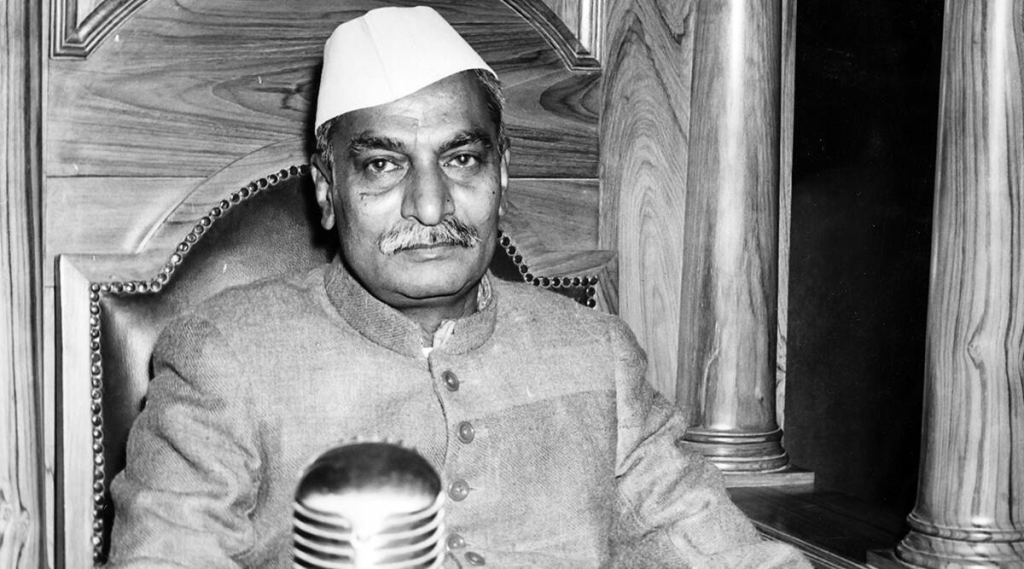
A freedom fighter, academic, Congressman, humanitarian, journalist, lawyer and the only two-term President in India’s modern history. A man with humble beginnings, Dr. Prasad or Rajen babu as he was fondly called was a staunch & stoic academic and strategist.
He joined the freedom struggle at the ripe age of 22 during the annual Congress session in Kolkata in 1906 as a volunteer and later moved up the ladder as a initiator of several sub-movements on regional levels. Even having being imprisoned in 1930s for participating in the Satyagraha movement.

Prasad & comrades, 1917, Champaran Satyagraha
After an arduous career as a lawyer, academic and politician in the Congress, Prasad babu served as the first Minister of Food and Agriculture in the central government from 1947 to 1948, after the 1946 Indian provincial elections. Upon independence in 1947, Dr. Prasad was elected as President of the Constituent Assembly of India, which was responsible for the preparation of the Constitution of India and served as the country’s provisional Parliament.

Dr. Rajendra Prasad with M.K. Gandhi
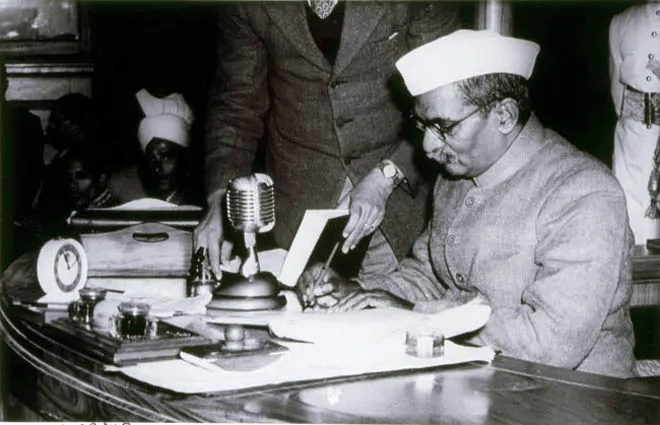
Dr. Rajendra Prasad becomes first president of Republic of India.
When India became a republic in 1950, Dr. Rajendra Prasad was unanimously elected as its first president of the country by the Constituent Assembly. Although a ceremonial role, Babuji encouraged development of education and organized tours to understand the public sentiments. He was re-elected as president in 1957 and served till 1962, advising the newborn Nehru government on issues while overlooking the implementation of the constitution.
Jawaharlal Nehru
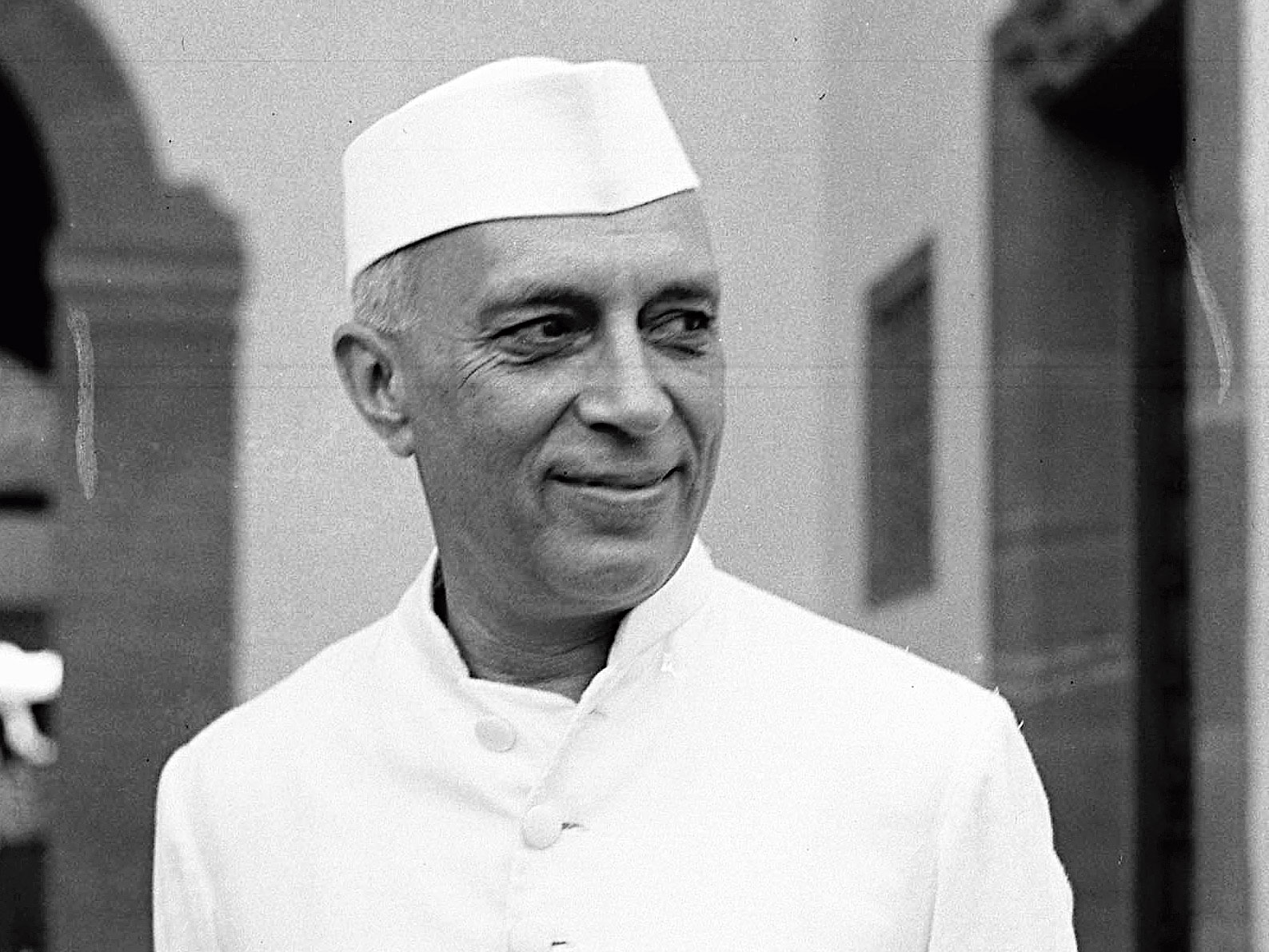
Shri Jawaharlal Nehru was the first Prime Minister of independent India, elected by the Congress when the British left India. He served as Prime Minister for 17 years, from 1947 to 1962.
Born in an affluent family and educated in the UK, he became a lawyer on the footsteps of his barrister father and later joined congress to begin his political career. Bringing in socialism and secularism at his forefront, he was Chairperson of three major Committees of the Constituent Assembly: The States Committee responsible for negotiations with the Chamber of Princes; the Union Powers Committee and the Union Constitution Committee, with Dr. B.R. Ambedkar as the head of the Drafting Committee.

J. Nehru with M.K. Gandhi
Nehru was elected President of the Lahore Session of the Indian National Congress, where complete independence for the country was adopted as the goal. He is known specially for his speech – “Tryst with Destiny” on the midnight of 15th August of 1947 as India was declared independent and he formally took charge from then Lord Mountbatten.
As Prime Minister, he played a critical role in the Indian economy: he was instrumental in the adoption of import substitution and the development of the heavy industries sector and laid the foundation of many important institutions like IITS, IIMs & AIIMS during his term.
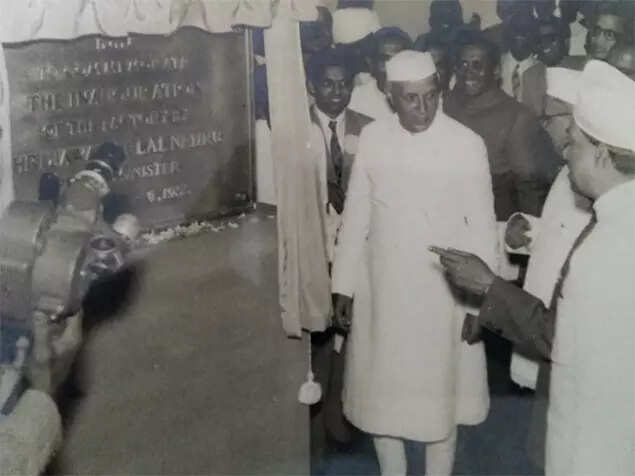
Jawaharlal Nehru at the launch of the first hand-wound HMT watch.
As for horology, Nehru laid the foundation of HMT – The Hindustan Machine Tools Limited in 1953, a state-owned heavy machinery manufacturing company. The watch making division, HMT Watches, opened in 1961 in close collaboration with Citizen of Japan. Machinery and technology transfer happened and initial models of HMT were based on Citizen models of the day. HMT went on to become a major watch manufacturer which till day makes part of every native collector.
Safe to say, the collection starts and end with an HMT. Now that’s a story for its own article.

The HMT Jawahar
Fate of the watches

Dr. Rajendra Prasad & Jawaharlal Nehru
Jawaharlal Nehru’s watch was sold in 1993 and again in 2003 by Sotheby’s Geneva for CHF 271k.
Dr. Prasad’s watch was stolen in 1964 from a museum in Patna, Bihar where he spent his last days after retirement. The watch reappeared 65 years later in 2011 at Sotheby’s Geneva at and estimated price of $222,000-$444,000. Dr babu wore the watch only on special occasions.
One of the two watches (Nehru’s) came accompanied with a letter from Rolex confirming the watch’s manufacture and delivery to Rolex’s agent in Bombay in February of 1949. The letter, written to Mr R. Beyer of Chronométrie Beyer Zurich, stated that the watch is possibly one of two examples made for Jawaharlal Nehru the first Prime Minister, and Rajendra Prasad, the first president of India.
The watch was pulled out of auction after the timely intervention of the Prasad family & Govt. of India. “We have no idea how the watch reached Geneva but can confirm that the family had nothing to do with it. We also believe the item rightly belongs to the nation, to which we shall remain forever indebted for enabling our forebear to serve it…We should all feel most grateful if you could kindly look into the matter.” wrote Ashoka J. Prasad, his eldest grandson, in a letter to then Ambassador of Switzerland to India.
Following his death in 1963, many of Dr. Prasad’s possessions, including the watch, were donated to a museum in Patna, capital of the state of Bihar from where it was kidnapped and considered lost, until it came back to Geneva, where it was born.
Amongst the array of promises and assurances from diplomats and politicians the issue went dormant.
Rolex & Nehru
Jawaharlal Nehru was a Rolex man, of course he was well off to afford it back then and suited his demeanor.

Jawaharlal Nehru in the Thinking Man pose.
Nehru personally wore a Rolex Ref. – 6105 Oyster Perpetual Ovettone ‘Bubbleback’. There are many photos of him wearing this Rolex – none of them wearing the one with the map of India. No records to mention him wearing it. It was later gifted to someone & eventually sold, as mentioned above.
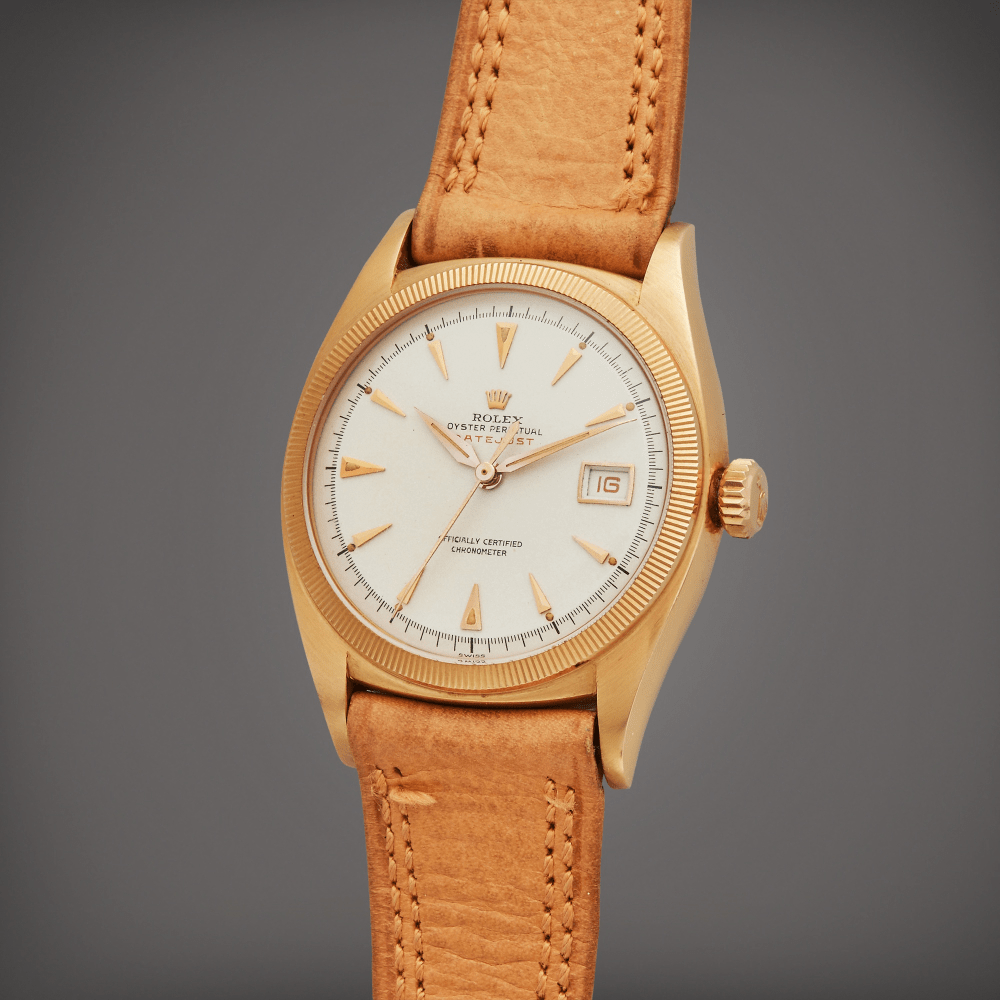
Rolex Ref. -6015 Oyster Perpetual Bubbleback similar to what Nehru wore.
This explains perfectly well his choice for the watches mentioned above.
Jawaharlal Nehru was considered a revolutionary politician by many leaders here and abroad and played a major role in development of a newly carved India. Nehru helped development of the internationalist outlook of the Indian independence struggle. He sought foreign allies for India and forged links with movements for independence and democracy around the world and became the founding member of the Non-Aligned Movement in 1961.
Rolex runs deep in revolutions and the Nehru-Gandhi family too. J. Nehru’s grandson – Rajiv was known to wear a Rolex DD 1803 during his years in the premiership. Such is the story of the Rolexes of the Republic.


Rolex Ads – At the forefront of revolution & diplomacy.
Conclusion & Update
India Pride Project – a group of enthusiasts who identify, track and recover stolen religious and other artefacts from India & Indian temples and ensure their secure return have taken interest in the issue and have contacted Art Recovery International to recover Dr. Rajendra Prasad’s watch.
We hope to see the watch back in its karma bhoomi cherishing and inspiring the lives of young Indians.

 Caseback Chronicles
Leave a comment