
Welcome to our inaugural edition of “Watch on the Market,” a curated selection of remarkable vintage/neo-vintage/modern watches timepieces currently available in the collector’s market. Each month, we’ll dive deep into the stories, significance, and details of watches that deserve special attention and a new family.
Today’s selection spans from the 1930s to the 1960s, featuring an unusual Cartier, a rare Patek and a few of acquaintances watches for sale.
A Rare Cartier Spider – 1930s
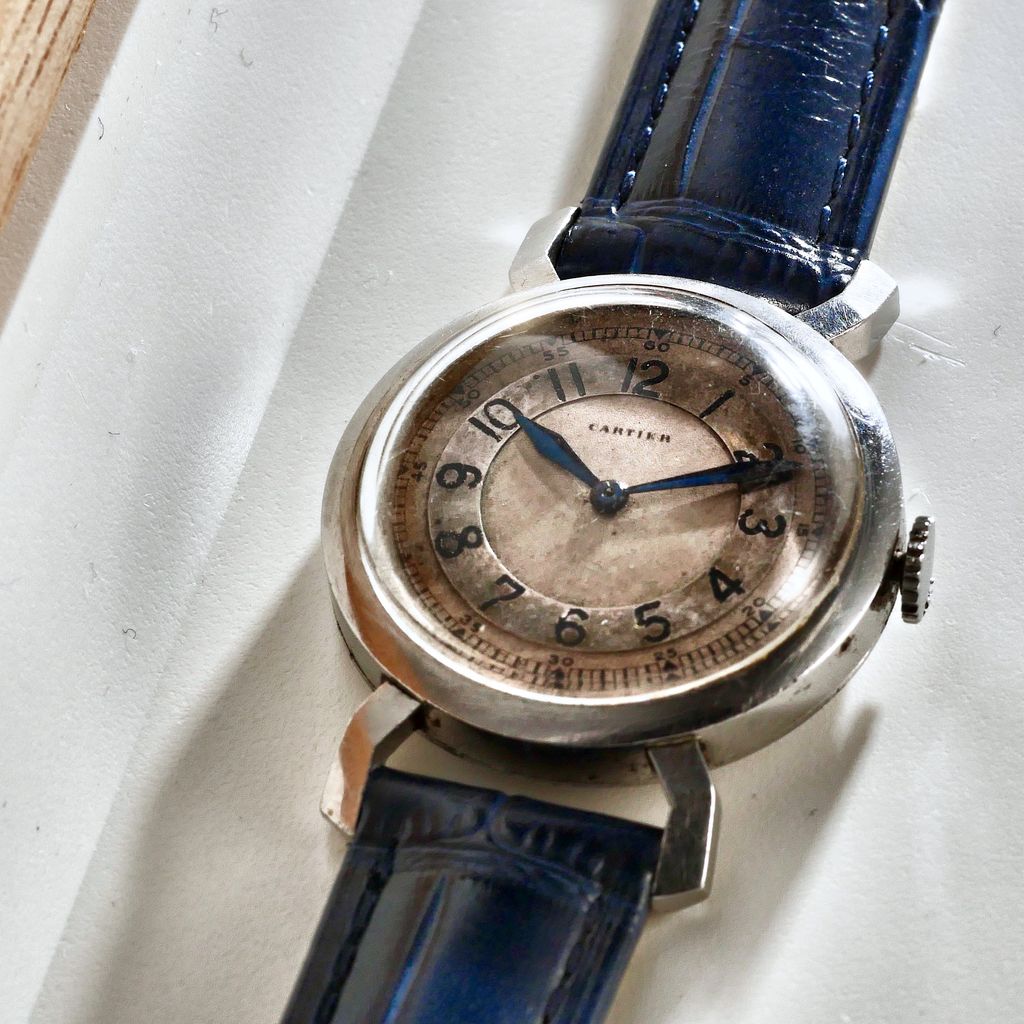
I would not write anything better about it than what has already been written by Gary; I’d honestly never seen anything like it. The auction catalogue described it clinically: 1930s, untouched, rare, but no words could capture its soul.
This probably unique 1930s pre-European Watch Company (EWC) Cartier represents one of the most innovative periods in watchmaking history, where art deco influence merged with technological advancement. Powered by an uber rare 15 jeweled pre-EWC LeCoultre movement, this is likely one of only a handful produced during the same period, making it a truly a eccentric find.
The European Watch and Clock Co. (EWC) was established in the 1920s as a joint venture between Cartier and Jaeger-LeCoultre. The EWC movements were made in the Jaeger-LeCoultre factory in Switzerland. This is exactly the time JLC got the name – watchmaker’s watchmaker.
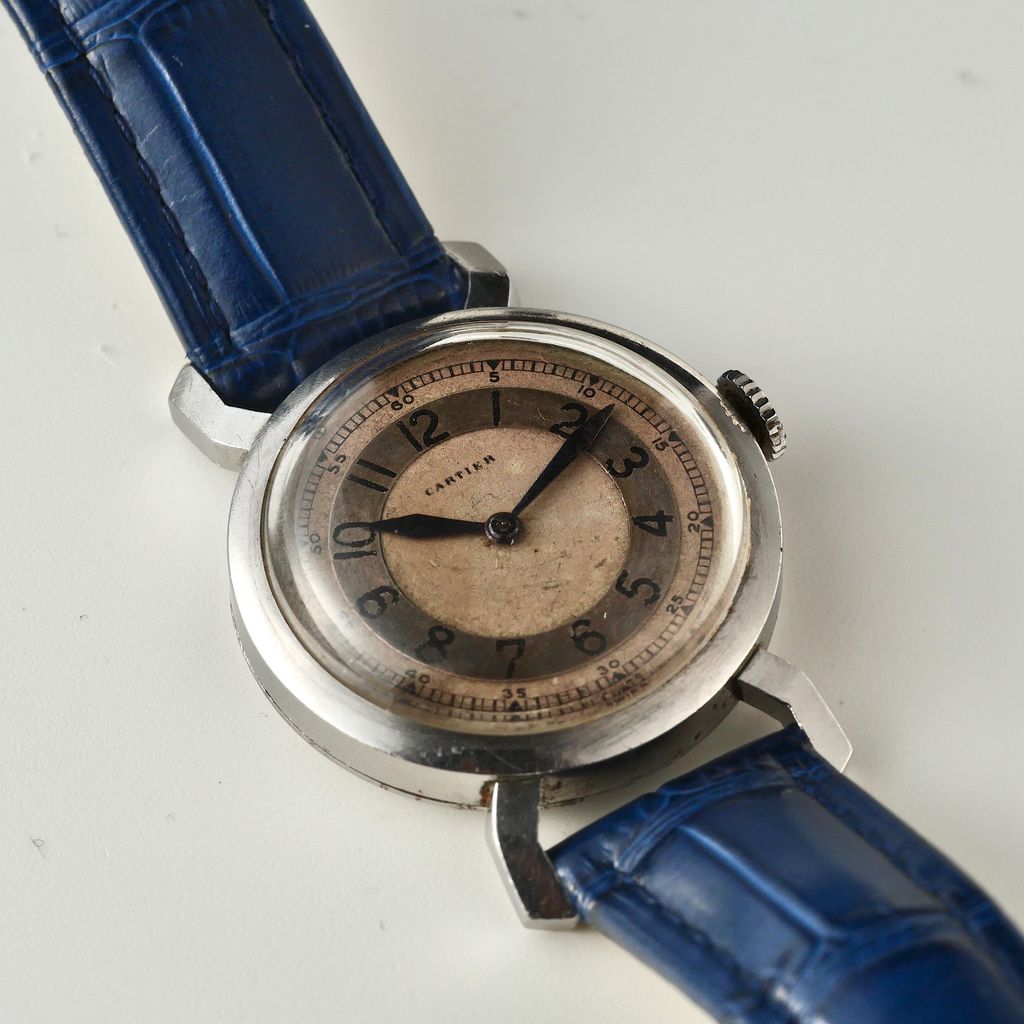
The same high-quality caliber is used in the iconic EWC watches of the era, some of which now fetch well over 100k USD. 1930’s was a time when wristwatches had started gradually becoming mainstream. The movement is hexagonal, made to fit and shaped like the case. On the same lines as the duoplan and JLC 101 calibres of the time.
It is hard to express the beauty of this watch in words. A distinctly shaped case – spidery, sitting over 32mm in diameter, a size that was considered quite modern and wearable for the time. The overall proportions and design cues reflect the refined, Art Deco-inspired sensibilities that defined Cartier’s aesthetic during the 1930s.
The hands, still shinning blue after revolving countless times in 9 decades on a pretty solid, no-nonsense dial with lovely fonts which haven’t faded with time. It does not have a seconds hand yet sports a beautiful seconds/minute track to which the larger of the hand comfortably reaches to tell the exact time. For some reason, it tells me, the watch has been in Hong Kong since it’s inception in the 1930s. If only it could speak!
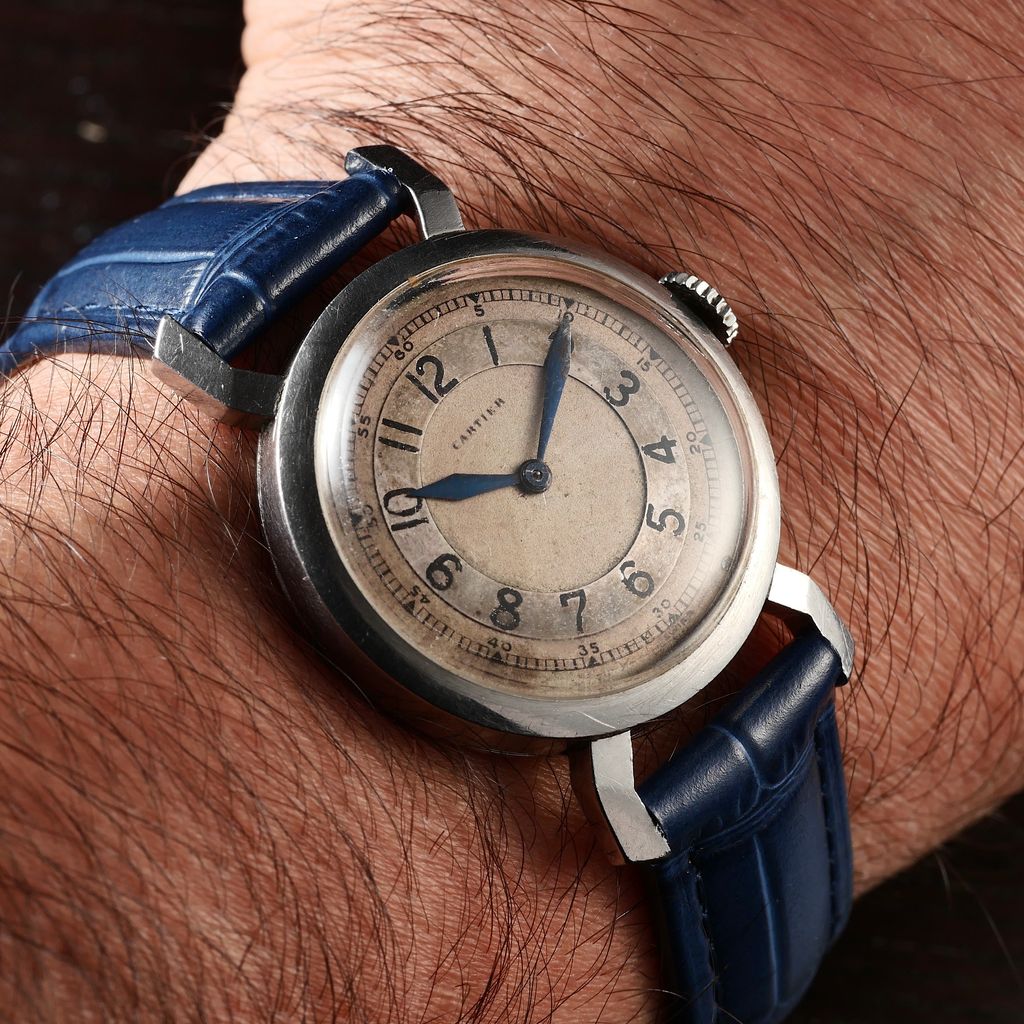
What makes this piece particularly special is its exceptional state. The original dial with a beautiful patina, the crisp case edges, and the mechanical integrity of the movement all speak to careful ownership over nearly a century. The movement, while predating EWC’s official establishment, demonstrates the high-quality finishing and technical prowess that would later become hallmarks of the movement company.
This watch is a personal favourite of us both. This isn’t a watch you buy ‘as an investment’. You buy to wear it, probably on a Sunday or to a meeting. Keep it with love and care, like its previous owners have. Something that requires extensive acquired taste and knowledge. But if you wish, this century old beauty is at Pushers.io by Gary @highendtime for $12,500. Honestly underpriced.
Patek Philippe Calatrava Ref. 2428

When discussing the pinnacle of mid-century dress watches, few references command as much respect as the Patek Philippe ref. 2428. This particular example, represents Patek Philippe during what many consider the golden age of Calatrava. The oversized 35mm (40mm lug-to-lug) case was ahead of its time, predicting the move toward larger case sizes that would come decades later. 32-33 mm was the norm back then led by small size Calatravas, now very famous in the Asian market.

The white enamelled dial exhibits a subtle patina that only enhances its charm with the applied gold arrowhead/shark tooth markers. But the key here is the case with its shaped straight lugs and narrow bezel, maximizes the dial presence while maintaining the refined profile that defines the Calatrava line.

The reference is one of the most collectible when it comes to 50s dress watches with shaped lugs, coming from the king of design-genre watches himself. As Gai rightly mentions, It is a bold statement of elegance. Patek Philippe Vintage Oversized Calatrava Ref. 2428 available for $15,500 here at Classic Watch NY / Morillo55.
Universal Geneve Tank Mellerio – 1950’s
Like a phoenix rising from the ashes of horological history, Universal Genève has returned; a name once whispered with reverence now poised to reclaim its place in the pantheon of watchmaking.
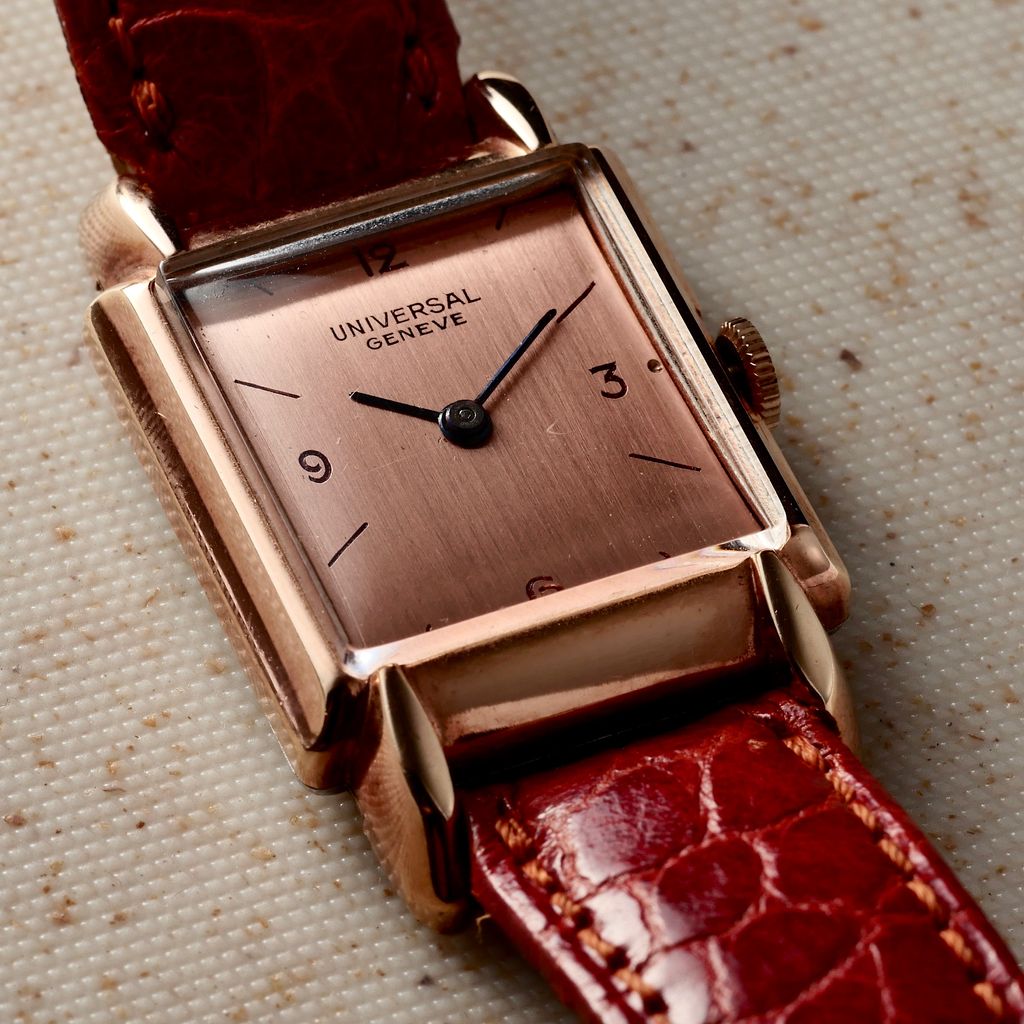
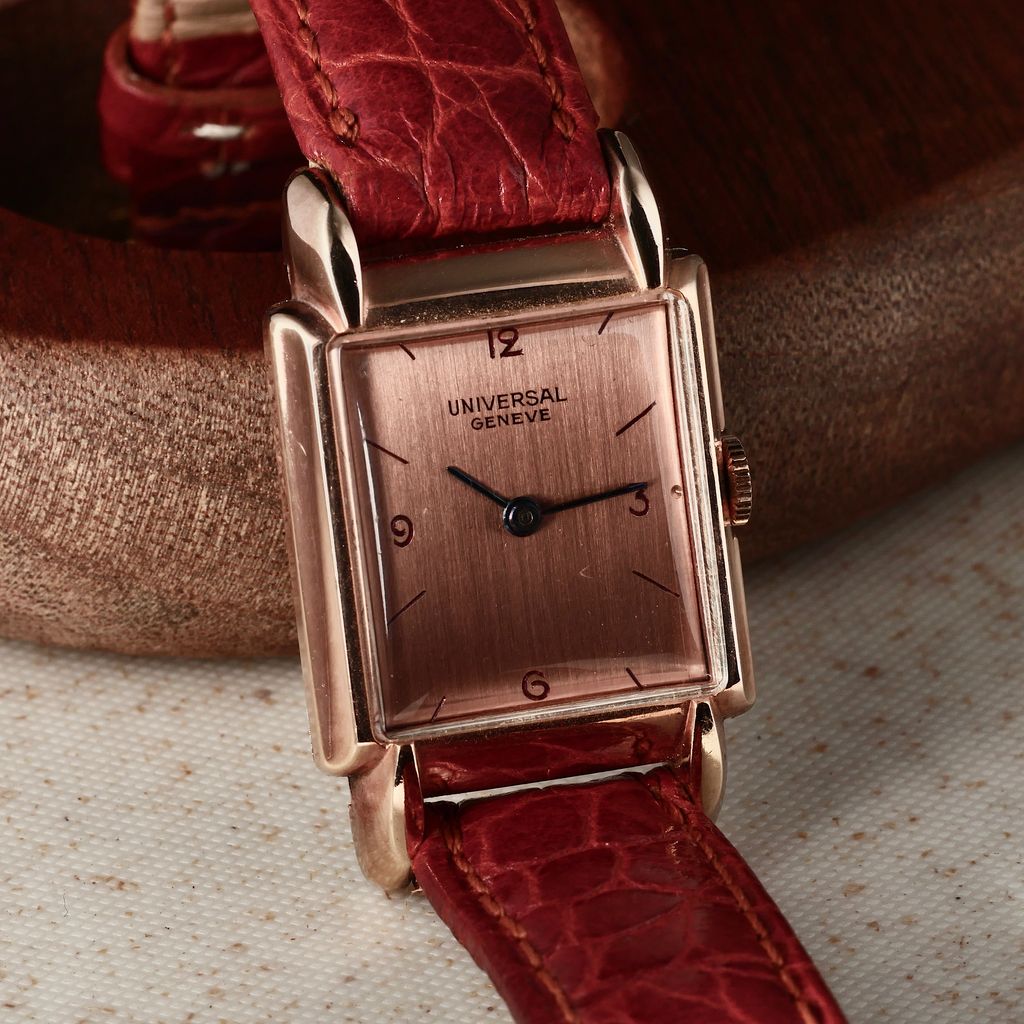
Few watches exemplify the artistic pinnacle of case design like the Universal Genève Tank Mellerio.
Amongst its many hallmarks is this uber rare Universal Geneve from the 1950s, adorned with horned lugs and what could be an art-deco Mellerio case that is entirely sculpted by hand. Comes with a distinctive “cornes de vache” (cow horn) lugs aren’t merely decorative – they represent a perfect marriage of form, functions and ergonomics, providing both comfort and visual drama.
Mellerio dits Meller, the world’s oldest family-owned jewelry house, is no stranger to crafting objects of desire. Founded in 1613, its ateliers have adorned royalty and artists alike, standing shoulder-to-shoulder with names like Cartier and Boucheron.
Unlike standard tank cases of the era, the Mellerio case features a unique architecture that makes it appear to float on the wrist. The lugs, sweeping dramatically outward, create negative space that enhances the watch’s presence without increasing its size, closely hugging your arm.
There is a certain niche hype about pink-on-pink watches. A pristine engraved salmon-ish dial with black hands and indices, housed in a nicely aged rose gold case sitting comfortably at 35mm lug-to-lug powered by a manual wound UG Cal. 239.
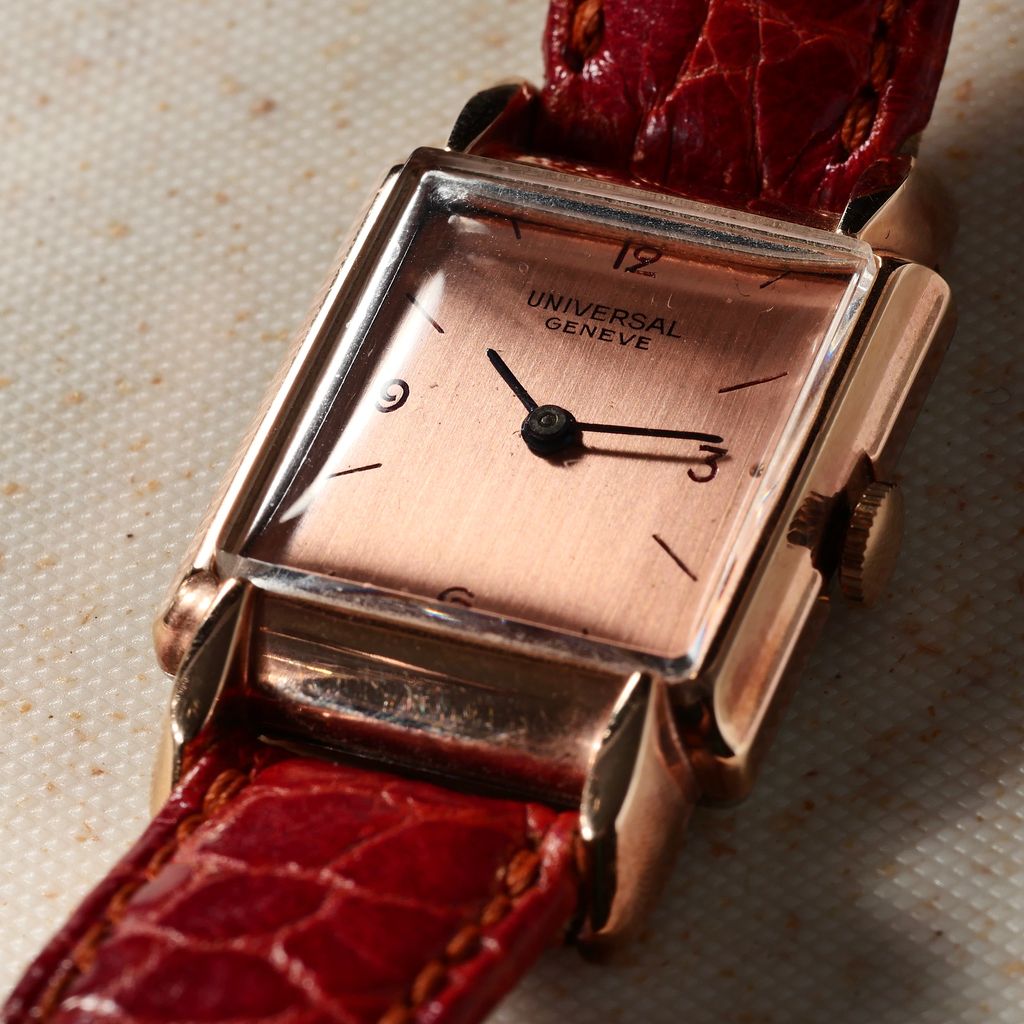
This unique piece of mid-century modern high-watchmaking is up for grabs for a very approachable USD $2,850 at Pushers.io
Record Watch Co. Pocket Watch

The 1960s Record Watch Co. gold-plated pocket watch represents a period when pocket watches were still being produced alongside wristwatches. This piece showcases the enduring influence of Art Deco design well into the mid-century period. The case, measuring a substantial 45mm, features a two tone bullseye dial with art deco numerals and a beautifully aged patina.
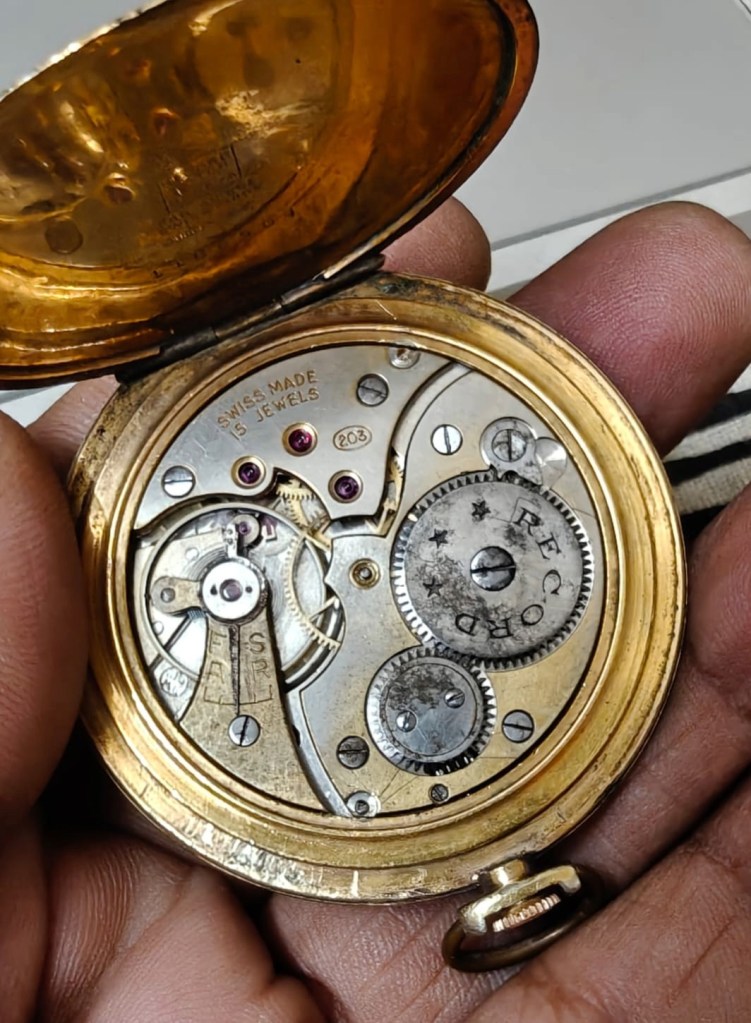
Record Watch Co., though less celebrated today, was known for producing chronometer-grade movements that competed with the best Swiss manufacturers. This example contains their manual-wind caliber, featuring distinctive Geneva stripes and hand-finished components.

The case back features an old pattern which faded beautifully with time. The kind of watch you would look at and smile.

This distinct gold plated Record aged well and is now looking for a new home, While the brand is defunct today, such pieces reminds us of an entity that was amongst the best. Up for grabs at $150 with Aritra Mukherjee.
Cooke & Kelvey 8 Day Travel Clock
An Anglo-Indian horological heritage, this exceptional 1930s-40s travel clock represents a fascinating chapter in horological history – the intersection of British precision, Swiss mechanics, and Indian craftsmanship.
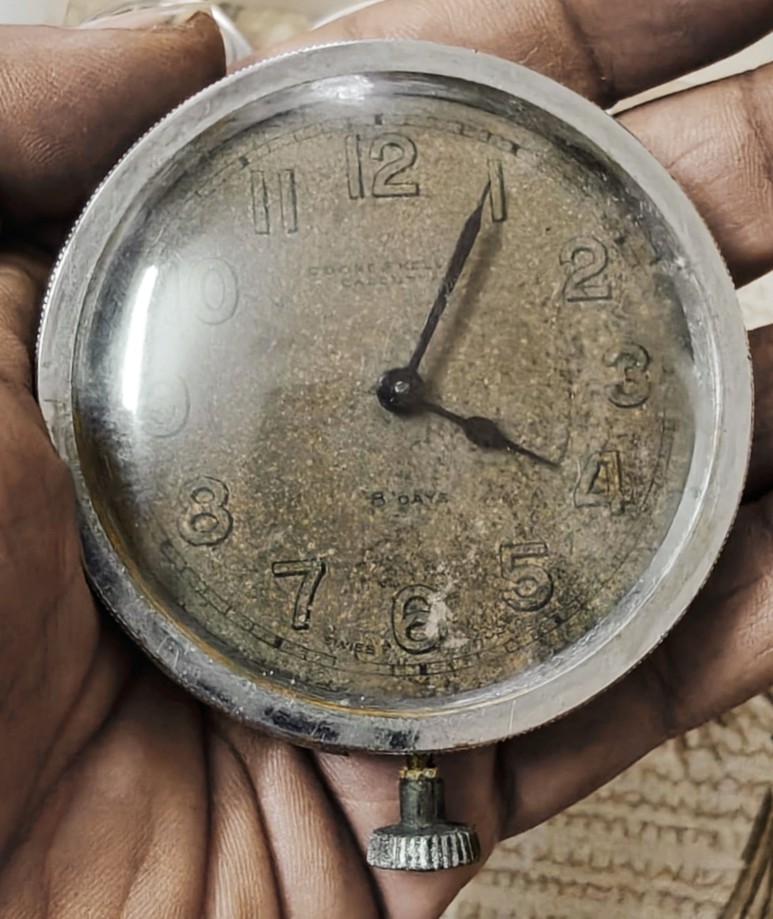
Cooke & Kelvey, established in Calcutta in 1858, was more than just a retailer; they were the horological heart of British India, serving both the colonial administration and Indian royalty, also often famously called the crown in colonial Indian horology. C&K was the official watchmaker to the admiralty.
An 8-day travel clock is a compact, portable timepiece designed to run for eight days on a single winding.These clocks were made for travelers, business professionals, and military officers who needed reliable timekeeping on the go. The extensive power reserve was achieved through a sophisticated mainspring design and careful gear ratio calculations.

The 8-day power reserve mechanism was a technical achievement, particularly valuable for travel in an era when reliable timekeeping was essential but not always accessible. The movement, was either made made at Cooke & Kelvey workshop in Calcutta or acquired from a Swiss manufacture but you can be sure of the robust construction and accuracy.
These clocks were made for travellers, traders, and military officers who needed reliable timekeeping on the go. They were manually wound, usually with a key or crown, and featured gears and springs for power. This one features a crown for that.
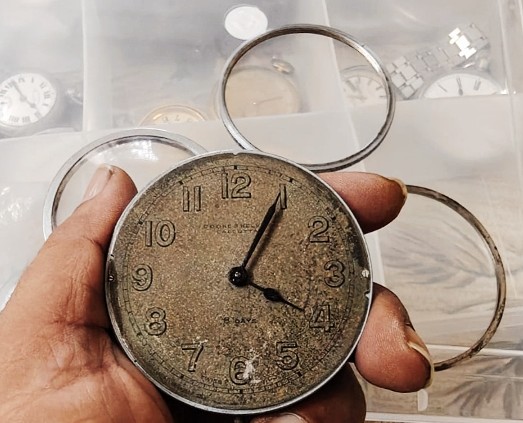
This particular clock was made for the civilian market as neither the hands nor the dial possess any traces of luminous residue. Yet the case design is very robust with a 3 layer casing. There is no seconds hand, not necessary as you are occasionally going to check the time. It is small enough to pack easily but large enough to read clearly.
Most came in leather, metal, or folding cases to protect them during travel. TBH, this watch comes without case yet holding case or custom casemaker’s contact can be provided on request.
This very rare and beautifully aged Cooke & Kelvey 8 Day travel clock is available for a very meagre $260, negotiable with Aritra Mukherjee.
Conclusion

This month’s selection demonstrates the breadth and depth available in today’s vintage market. From the architectural beauty of the Spider to the sculpted Patek Philippe, from the hand made Universal Genève to the cultural significance of Cooke & Kelvey, these watches not only represent excellent horological craftsmanship but also serve as tangible connections to significant moments in watchmaking history, since it’s inception.
All the relevant contacts have been provided at the end of the paragraphs of the particular watches. Hope you enjoyed the read.
 Caseback Chronicles
Leave a comment