For this edition of Watch On The Market, we take you to two different eras of craftsmanship throughout India.
Indian art and craftsmanship has been celebrated across the world, but in recent times has often overshadowed by theft and pride of its former colonizers and its subsidiaries. Today we take you two eras and styles, approximately 100 years apart exhibiting the evolution of watchmaking and related craft in India.
Lot 01 – Antique Inkwell & Pocket Watch Desk Set in Solid Silver, Circa 1929.
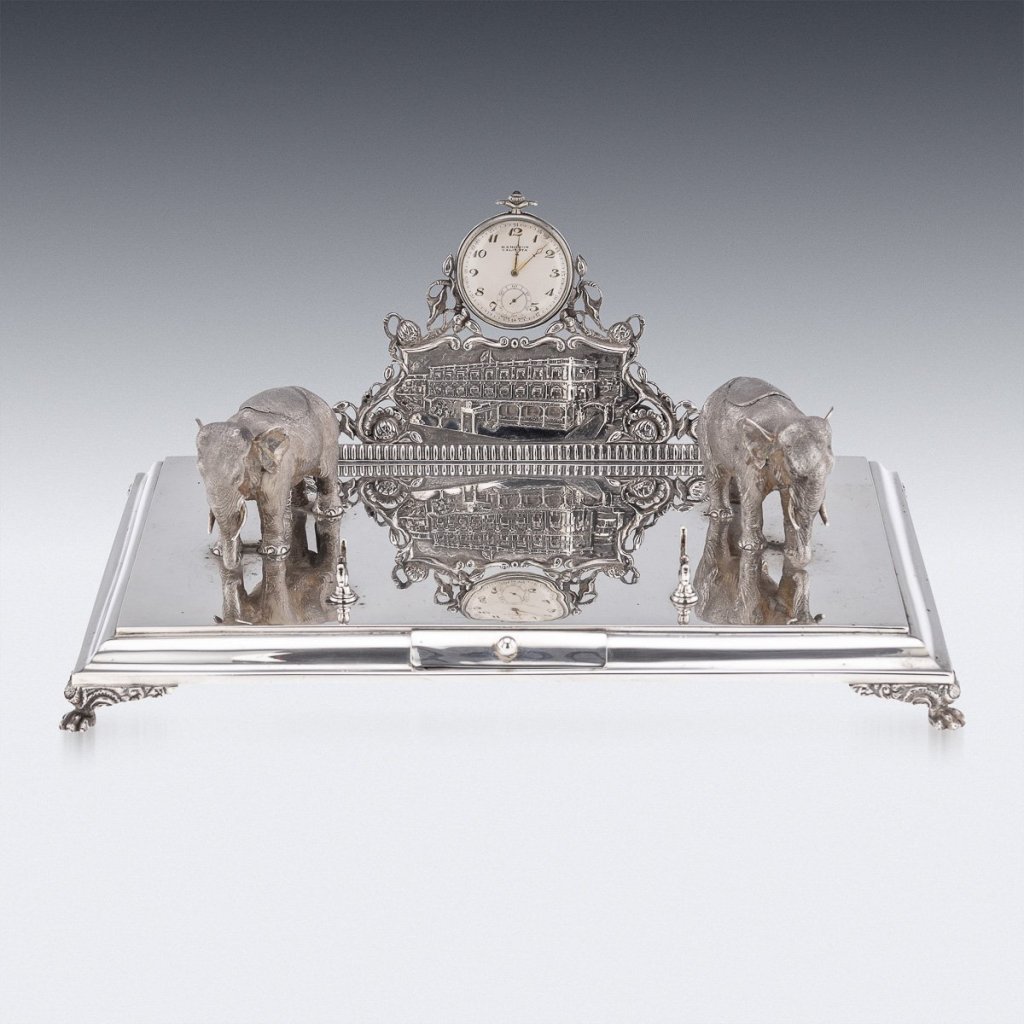
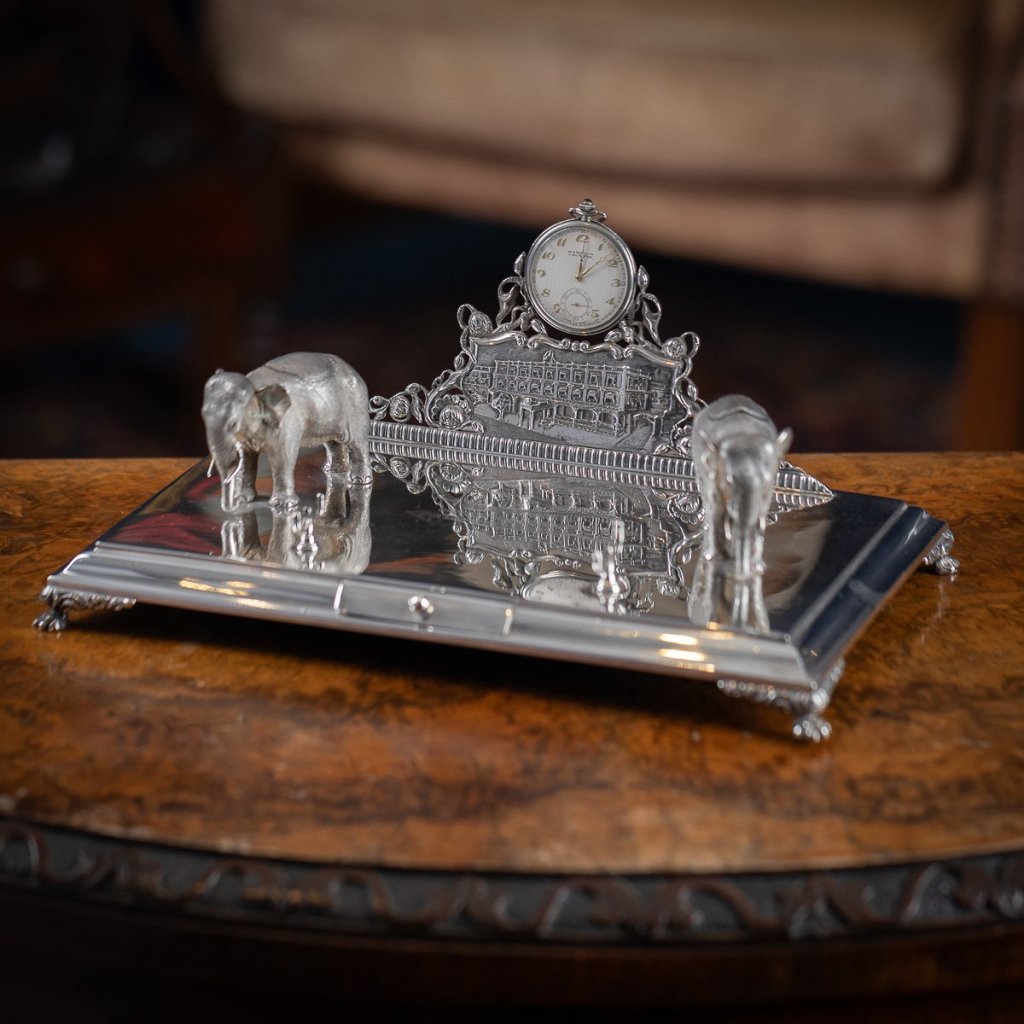
For sale with Alexander Pushkin’s is a what appears to be a custom built ink well and pocket watch desk set made in solid silver by local workshops and presented by Hamilton & Co. Calcutta to one of their outgoing employees.
Not to be confused with the American watchmaking firm with similar name, Hamilton & Co was established by English silversmith Robert Hamilton when he travelled and settled in colonial Calcutta (now Kolkata) opened his Jewellery and Silversmithing shop at 5 Tank Square under license from the East India company in 1808. The firm developed itself providing services in silverware, gold and other precious metals and gemstones and retailing watches across the India’s eastern coast for the colonial government, sometimes also handling loot auctions for the East India Company.
Kolkata, or Calcutta, was a colonial city. The British East India Company developed Calcutta as a village by establishing an artificial riverine port in the 18th century CE. Kolkata was the capital of the British India until 1911, when the capital was relocated to Delhi. Kolkata grew rapidly in the 19th century to become the second most important city of the British Empire after London and was declared the financial (commercial) capital of the British India. This was accompanied by the fall of a culture that fused Indian philosophies with European tradition.
The brand’s polished silverware, with elegant lines and delicate decorations appealed the members of the British government as well as the Indian aristocracy. Soon the firm became a proper statement among European royalties, no less considered than Tiffany or Cartier.
In 1817 Robert Hamilton lost interest in the company but the business carried on thanks to new partnerships. After the independence of India in 1947 the business survived 26 years more, and it definitely closed in 1973.

Our gift here is a rather elaborate piece of art work/silverware featuring a tray on which are mounted two pen-holders with two elephants in solid silver which are the inkwell. and a small drawer for storage. Quite elegant.

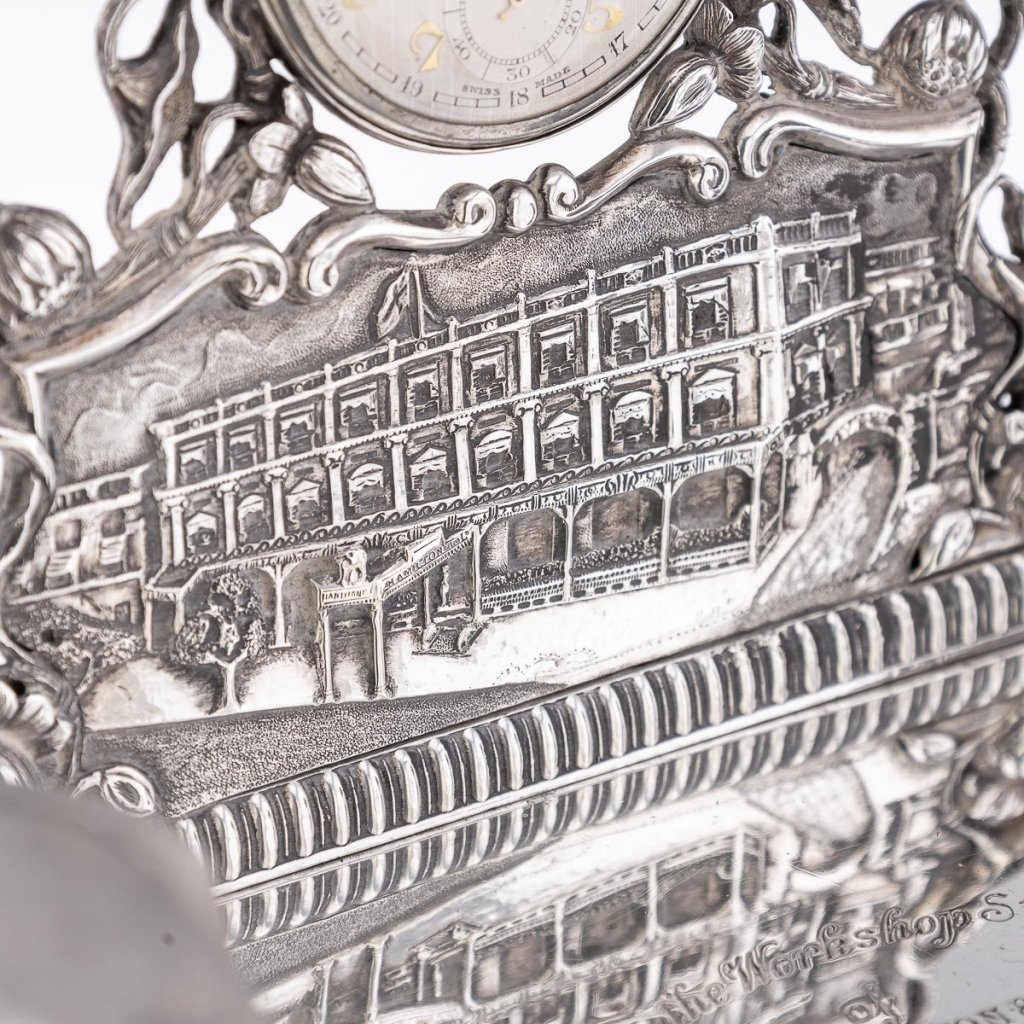
But it is on the rear of the set where we should focus our attention, the plaque displays an ornate floral border, enclosed within is an engraved scenery of the building which were the workshop and headquarters of Hamilton & Co, Calcutta, situated at 7 Court House Street, where it remained until its closure in 1973. Above which is mounted a pocket watch, not just any pocket watch..
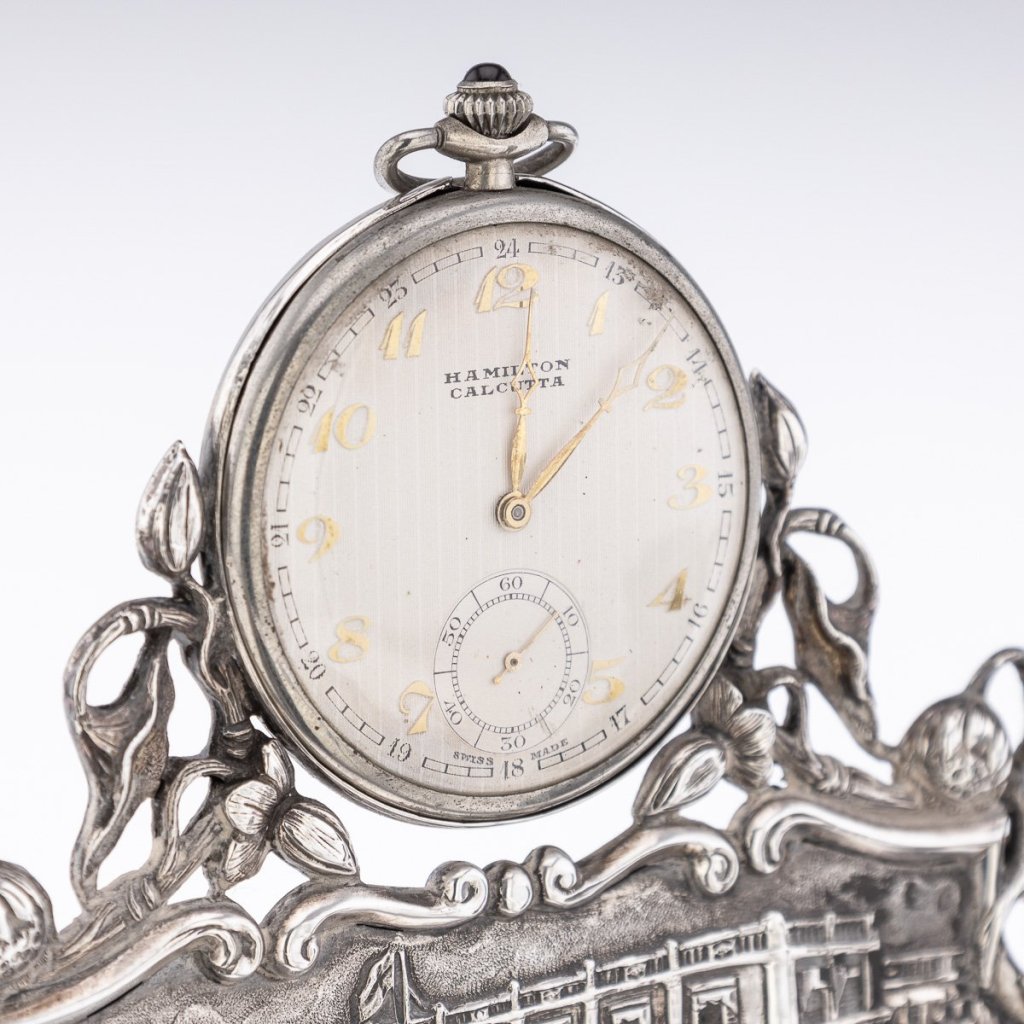
Breguet Pocket Watch Signed Hamilton Calcutta
The watch dial is textured with lateral lines across its face on which are golden applied Breguet numerals and printed minutes and sub-seconds track on which lie the beautiful pair of cathedral hands. The dial is inscribed Hamilton, Calcutta in gold. As per the lot information, “The movement is of Swiss manufacture, the esteemed house of Breguet, and is wound via a crown adorned with a sapphire cabochon.” The movement of the watch is not visible in the auction pictures hence we are unable to verify the exact reference of the watch but during the same era, the British crown, a lot of Indian maharajas and middle eastern rulers were regular clients of Breguet.
As can be seen in the picture above, the pocket watch is encased in a silver plate fixed/soldered to the structure. The best part being the watch is removable and can be used independently of the structure.
This set is a gift to a certain William Smith who used to work at Hamilton & Co and retired in 1929. As inscribed on the face of the plate;
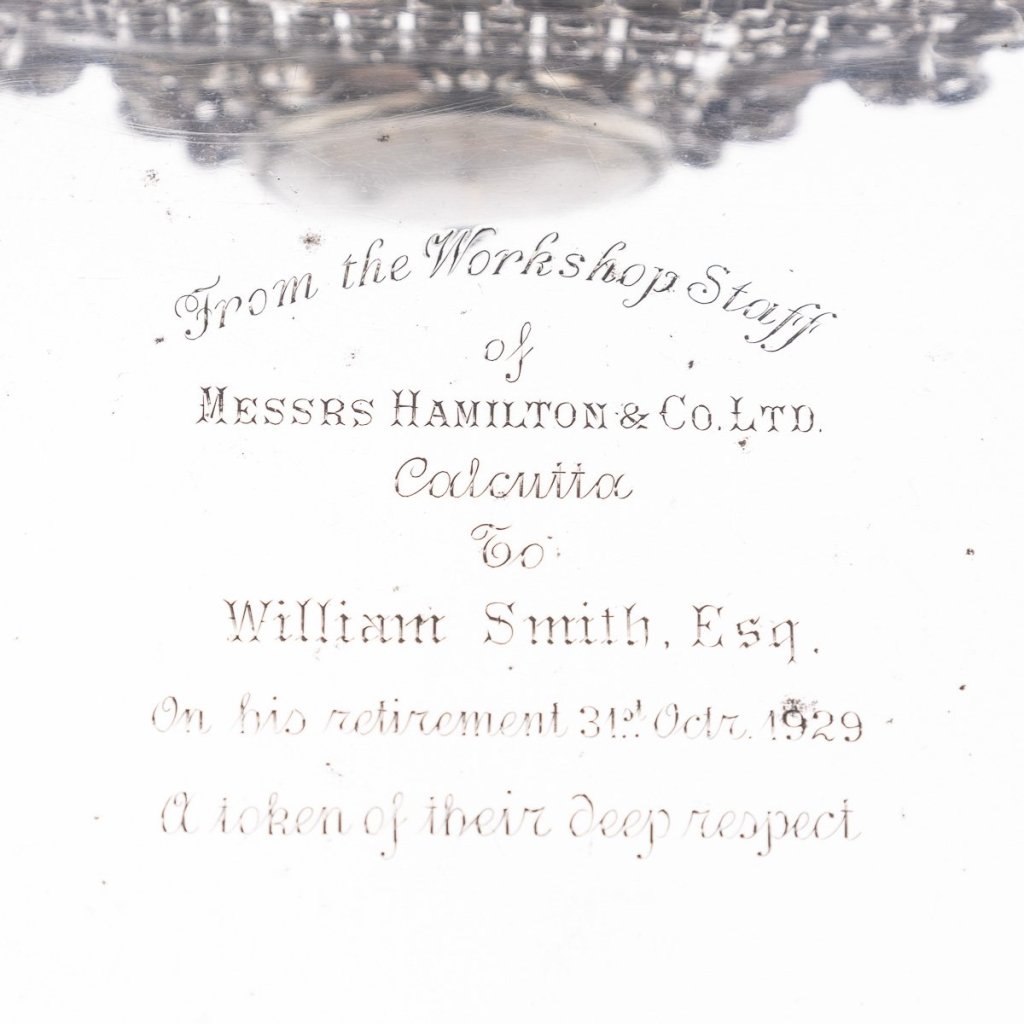
William Smith. Esq. The “Esq.” suffix is an abbreviation for “Esquire,” a title used in historical context and/in British English, it was a less common honorific for a man of a certain social rank, though it is now mostly obsolete or used as a general courtesy title.
Messrs Hamilton & Co. – Messrs is a mid 18th century abbreviation of Messieurs, plural of Monsieur. Used as a title to refer formally for names of companies.
Some details of the set;
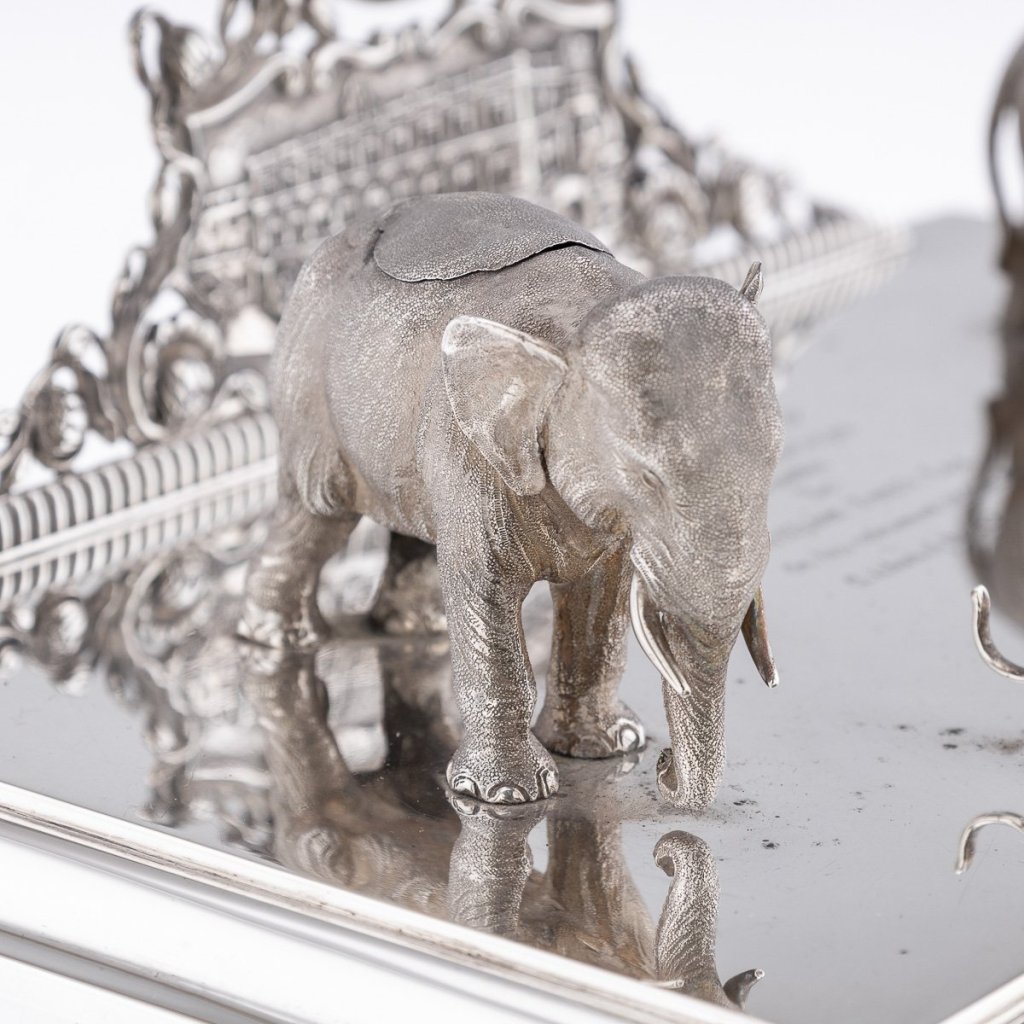

Elephant has been a symbol of power, wisdom and stability in Indian culture. But here the form of a elephant, thanks to its size are used as inkpots.
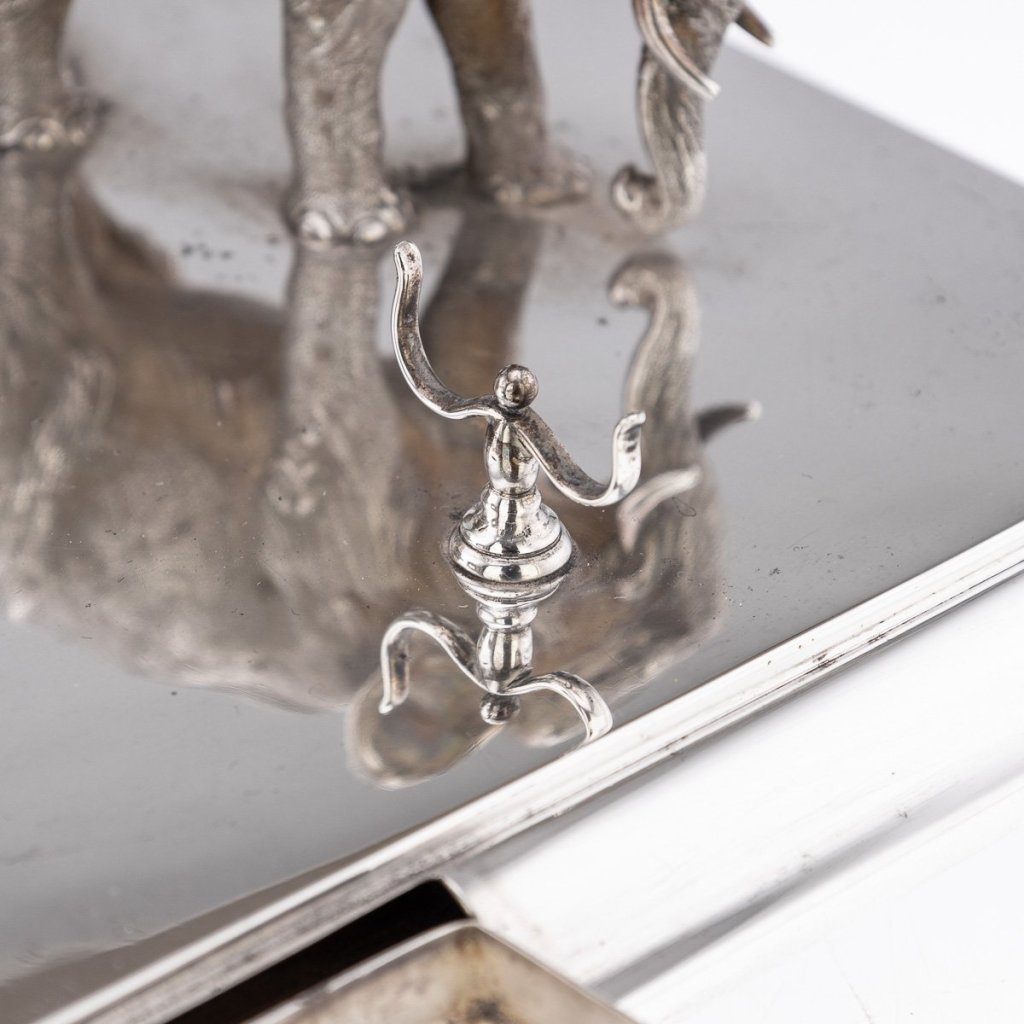
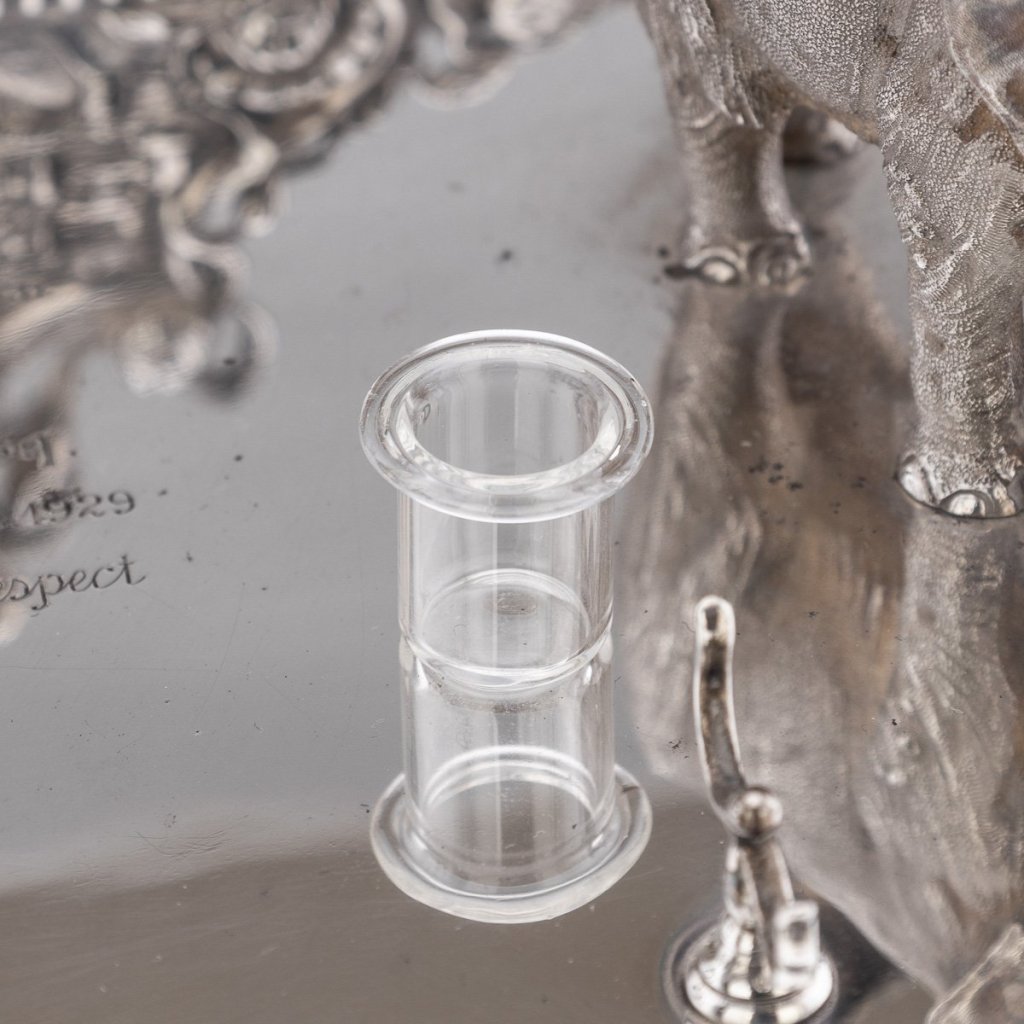
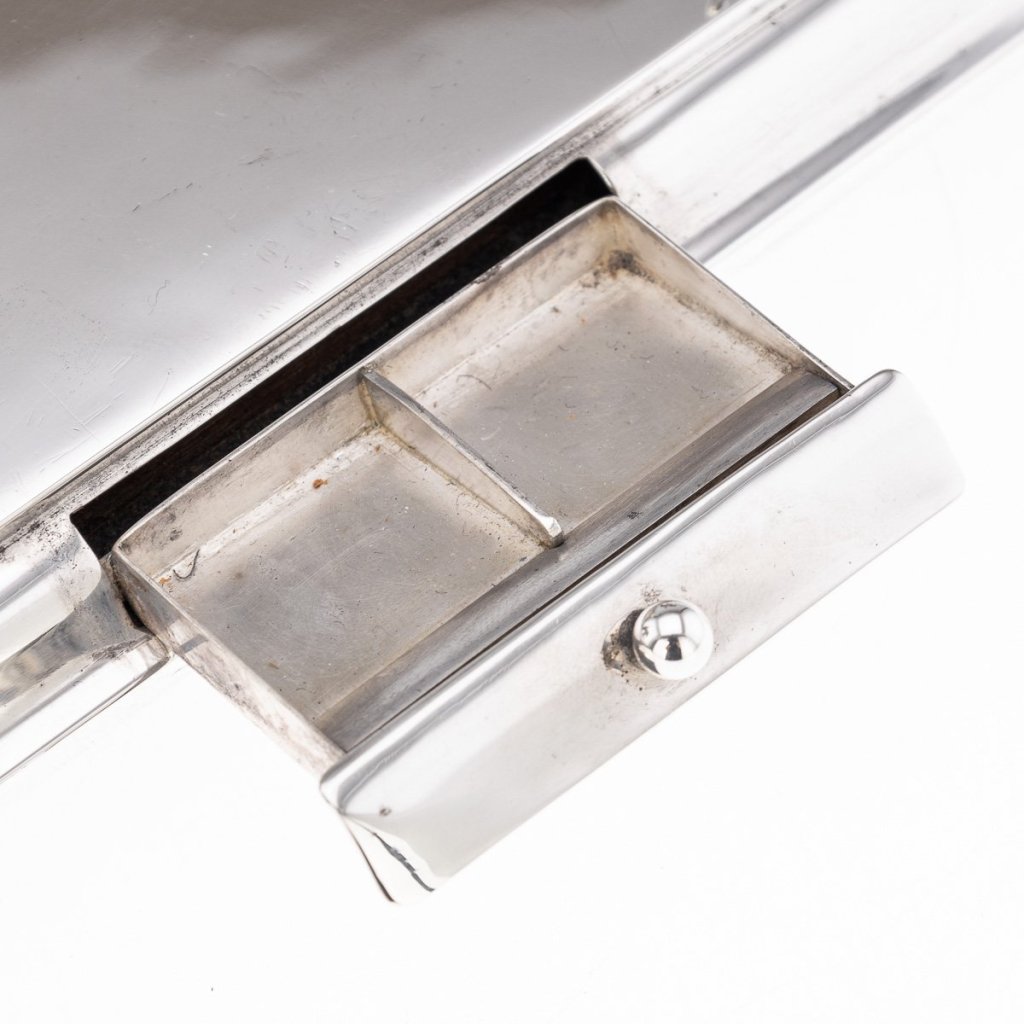
At the front of the desk set is a pen rest, and beneath it, a pull-out drawer designed for storing postage stamps. As is common with Indian silver of the period, the inkwell is unmarked; however, it has been acid-tested, confirming a silver purity of 900+ or higher.
The Breguet movement in a silver case, retailer signed, alone is worth £10,000 in this economy. But the whole set is available for sale at Pushkin’s for a sum of £9,995.
Lot 02 – Extremely rare watch cabinet/necessaire for pocket watch, circa 1800.

Earlier this year while exploring the depths of auction lots and lost art of Indian horology and craft we discovered this fascinating work of a wooden & ivory work cabinet made specially, to keep a pocket watch and other related accessories.

The middle section is used to hold the pocket watch and its chain while other compartments are used for cufflinks, winding keys etc..
It is important to observe the make of the product – a wooden base is used, to decorate with Ivory. Ivory – inlaid, engraved, carved and fixed on the simple wooden cabinet. The legs of the cabinet (similar to the above lot) are also made from solid ivory.

This style of work is from the ivory industry of Vizagapatan (today Vishakhapatnam), a port city in southern India. Such cabinets are only suitable for a king’s watch. Such boxes often uses exclusive woods such as rosewood for boxes. The tradition reached Europe via the Dutch VOC and East India Company started expanding their operations across India.

This cabinet was sold in September this year at Cortrie Spezial Auktionen, Germany for an unknown sum.
 Caseback Chronicles
Leave a comment