
Renowned Indian rocket propulsion expert and aerospace engineer Dr. V. Narayanan was appointed the next chairman of the Indian Space Research Organization (ISRO). Dr. Narayanan on January 7, 2025.
In one of his official portraits, he watch – loosely placed on his wrist peaked out of his shirt cuff. It is a very special watch.
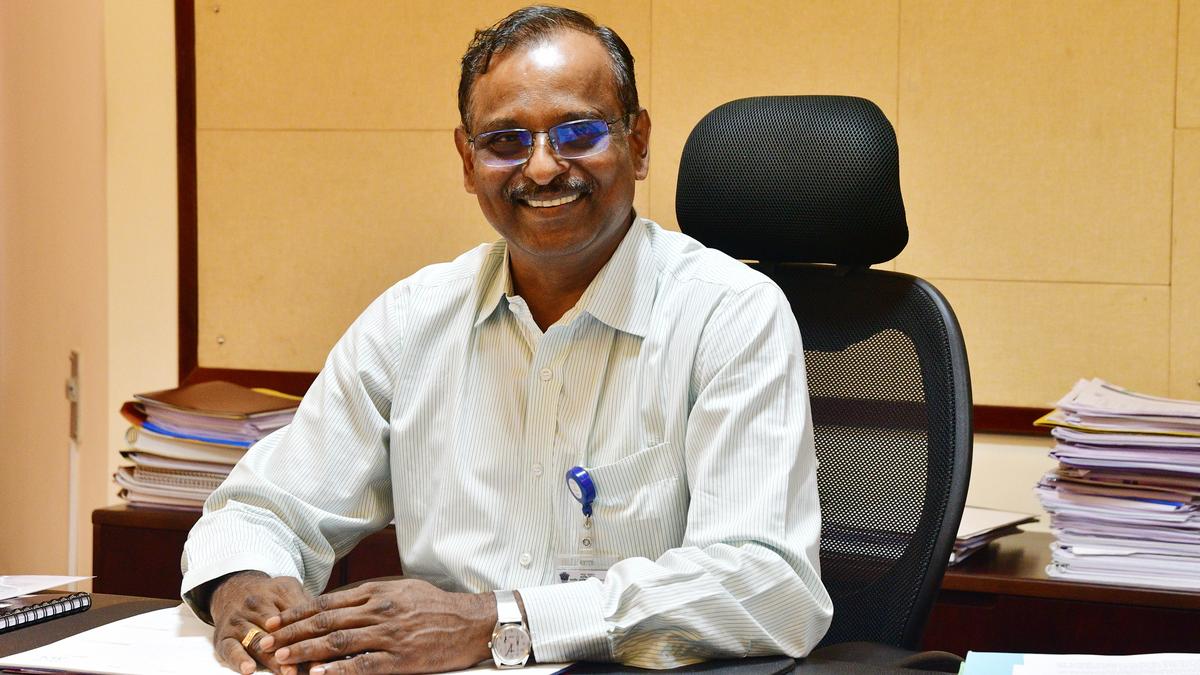
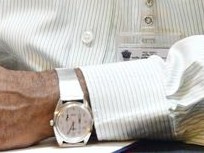
This watch is a steel watch made by homegrown state-owned brand Hindustan Machine Tools (H.M.T) for the Indian Space Research Organization (ISRO) in 1987 to commemorate the successful launch of the ASLV-SROSS Project, marking the successful launch of satellite into lower earth orbits.
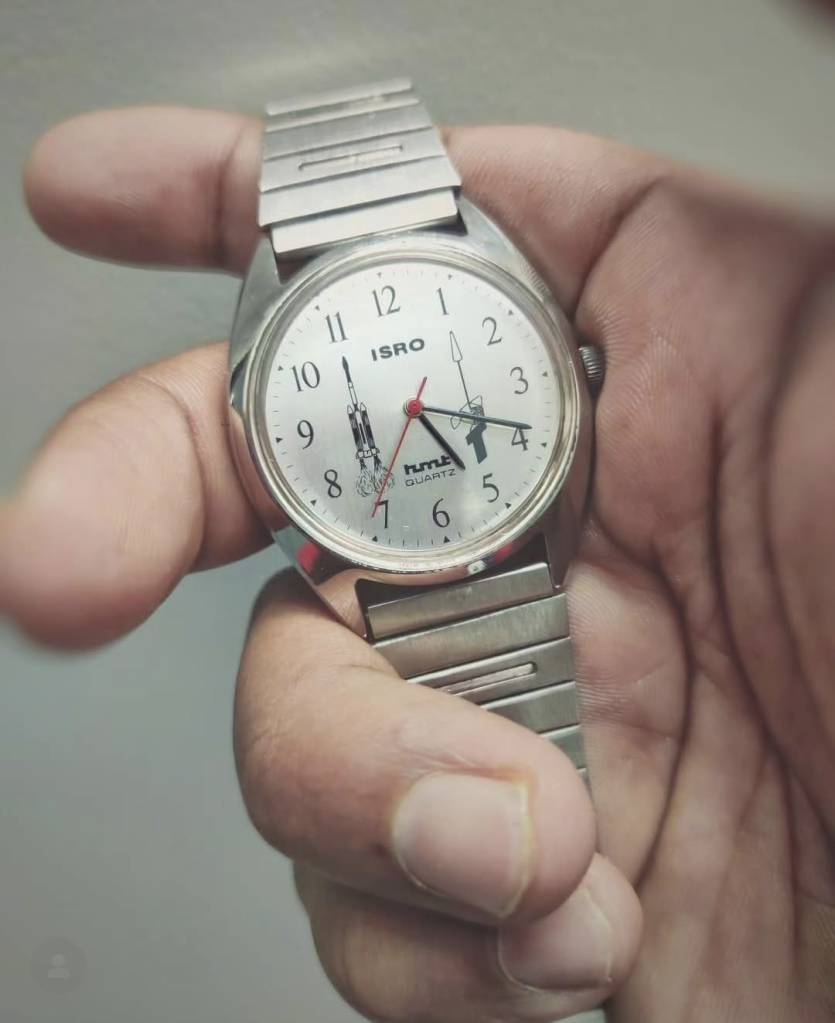
Picture: Rajesh E.
“This HMT watch was presented to all ISRO employees in 1987 after the successful launch of the Augmented Satellite Launch Vehicle (ASLV) in its third attempt. On one side is a small figure of ASLV rocket and on the other side the SROSS (Stretched Rohini Satellite Series) satellite figure. Full stainless steel body and strap .The current ISRO emblem was not existing in those days. ISRO is written in bold letters on top” said Dr.Venkitakrishnan PV, a distinguished scientist and a retired director from ISRO HQ.
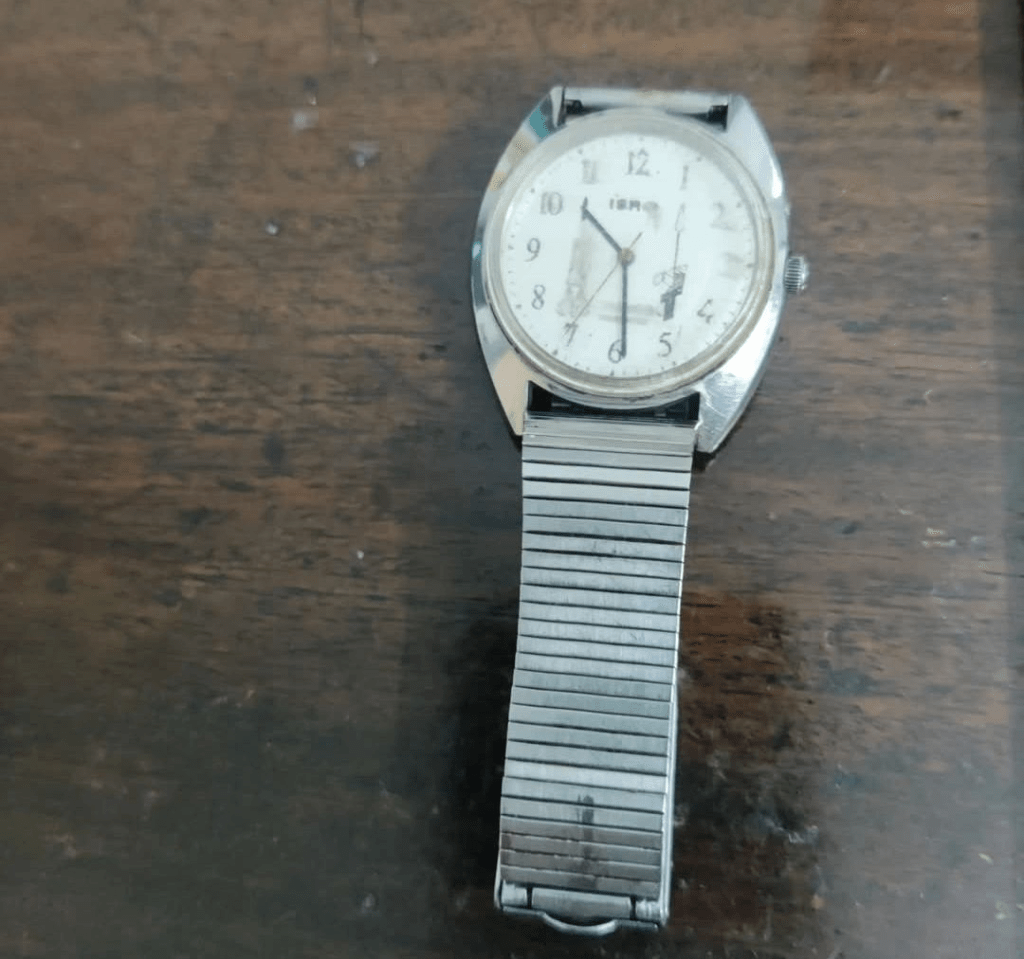
Dr.Venkitakrishnan’ HMT ISRO Watch
As it turned out, these were made in numbers and in versions – both male and female in 1987. Veteran H.M.T collector Late Shri Prashant Pandey was the first to break the bubble with the below picture where both the versions can be seen.
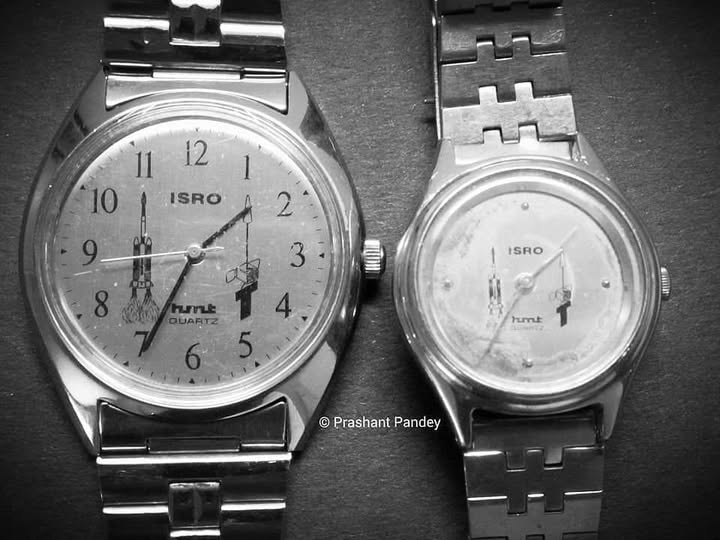
HMT ISRO – Ladies & Gents
Picture: Shri Prashant Pandey.
Coming back to Dr. V. Narayanan, Dr. Narayanan joined ISRO in 1984, initially working in the Solid Propulsion area for Rohini Sounding Rockets, Augmented Satellite Launch Vehicles (ASLV), and Polar Satellite Launch Vehicles (PSLV) at the Vikram Sarabhai Space Centre (VSSC) in Thiruvananthapuram.
These were the very systems of the rockets displayed on the dial of the watch – the ASLV D-1. These were the formative years of his career at ISRO after completing his DME at the Government Polytechnic College, Nagercoil with with First Rank in 1982. After his graduation, he and his brother both earned admission for the Bachelor of Engineering course. Because his family could afford to pay for only one brother’s education, Narayanan chose not to pursue the course at Anna University, his dream college.
He would later join ISRO in 1984 and complete his MTech degree in Cryogenic Engineering with First Rank from Indian Institute Of Technology (IIT) Kharagpur in 1989, post the successful launch of the project meanwhile he received this watch, and later his Ph.D in Aerospace Engineering also from IIT Kharagpur in 2001.
He contributed to the process planning, control, and realization of ablative nozzle systems, composite motor cases, and composite igniter cases.
PROJECT ASLV-D1
The year 1987 marked a crucial chapter in the evolution of the Indian Space Research Organisation (ISRO). As the organization sought to advance its launch vehicle technology and expand the scope of its satellite programs, it undertook two significant missions that year: the maiden flight of the Augmented Satellite Launch Vehicle (ASLV-D1) and the attempted deployment of the Stretched Rohini Satellite Series (SROSS-1) satellite. Though both missions faced setbacks, they laid the groundwork for future successes and represented a leap forward in India’s aspirations as a spacefaring nation.
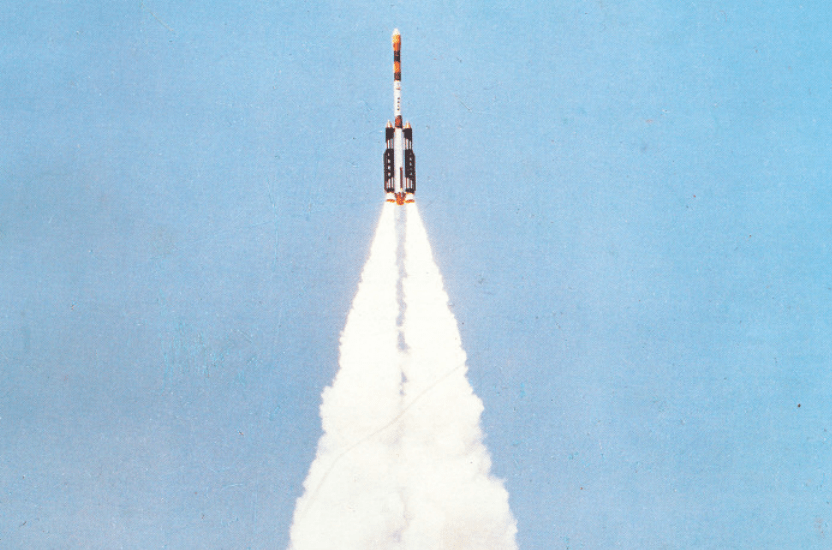
ASLV-D1 lifts off from Sriharikota. Pic: ISRO.
On March 24, 1987, ISRO launched the ASLV-D1, the first developmental flight of the Augmented Satellite Launch Vehicle. The ASLV was a five-stage, solid-fuel launch vehicle designed to place payloads of around 150 kilograms into low Earth orbit (LEO) – a significant improvement over the earlier SLV-3, which could lift about 40 kilograms. The ASLV-D1 mission carried with it the Stretched Rohini Satellite Series-1 (SROSS-1) satellite. The SROSS series was envisioned as India’s foray into scientific research satellites, intended to study gamma-ray bursts, upper atmospheric phenomena, and test onboard systems for future remote sensing and communication missions.
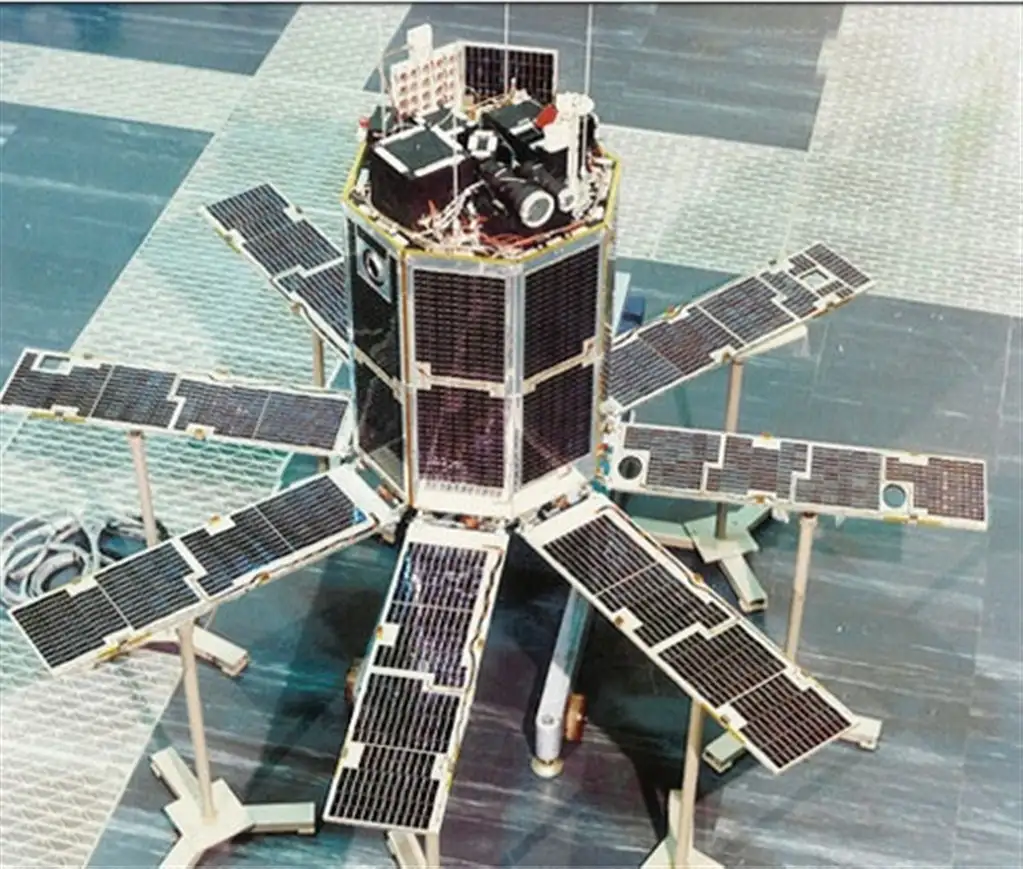
SROSS-1. Picture: ISRO.
The ASLV-D1 introduced several advanced features for the first time in India’s space program. These included strap-on boosters, more sophisticated active guidance systems, and enhanced control technologies. The mission’s primary objective was to test these systems and demonstrate ISRO’s ability to move toward more powerful and modular launch platforms.
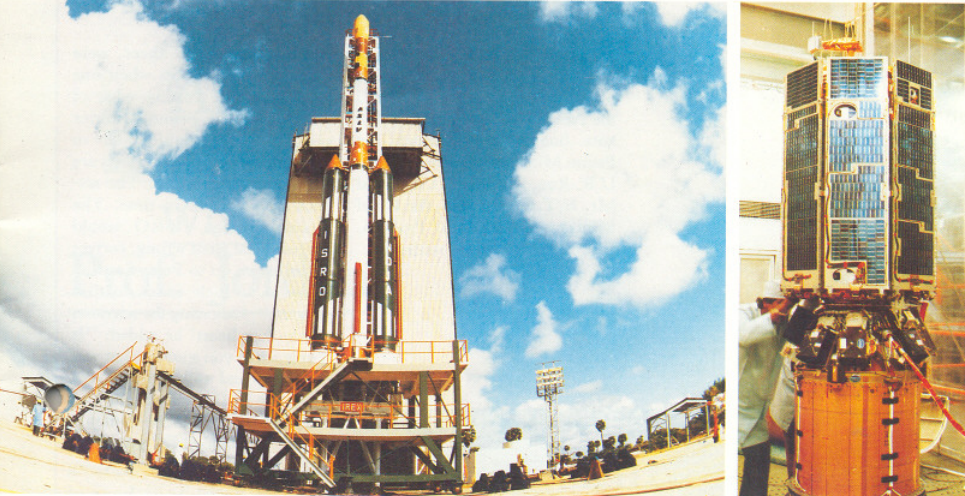
ASLV-D1 & SROSS-1. Picture: Space India.
Unfortunately, the mission ended in failure twice shortly after lift-off due to a loss of vehicle control during the first stage. Despite not achieving orbit, the attempt marked a significant technical and strategic milestone for ISRO. It underscored the complexities of multistage rocket design and set the stage for refining the ASLV series in subsequent years.
It was only in its third attempt did it meet success, that moment was celebrated with this watch.
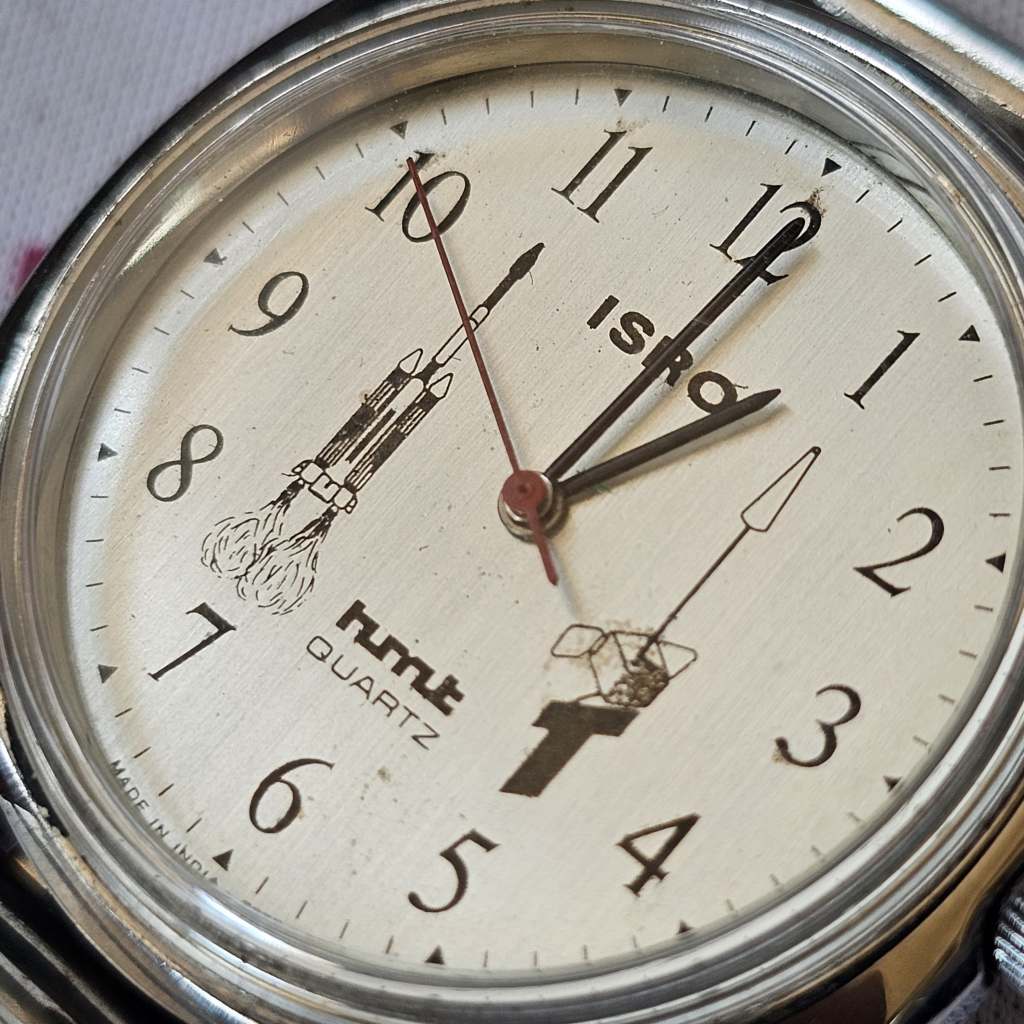
The HMT ISRO featuring the ASLV-D1 lift-off alongside the stretched Rohini satellite. Picture: Rudra Jog.
Though both ASLV-D1 and SROSS-1 did not succeed in their immediate objectives, their long-term significance cannot be overstated. The ASLV program continued to evolve, culminating in a successful flight with ASLV-D4 in 1994. More importantly, the technological lessons learned from these early ASLV flights directly informed the development of ISRO’s later and more powerful launch vehicles, such as the PSLV and GSLV.
Meanwhile, the SROSS initiative laid the foundation for India’s future scientific satellites, eventually contributing to the success of missions like Chandrayaan-1, Astrosat, and Mangalyaan (Mars Orbiter Mission).



Leave a Reply