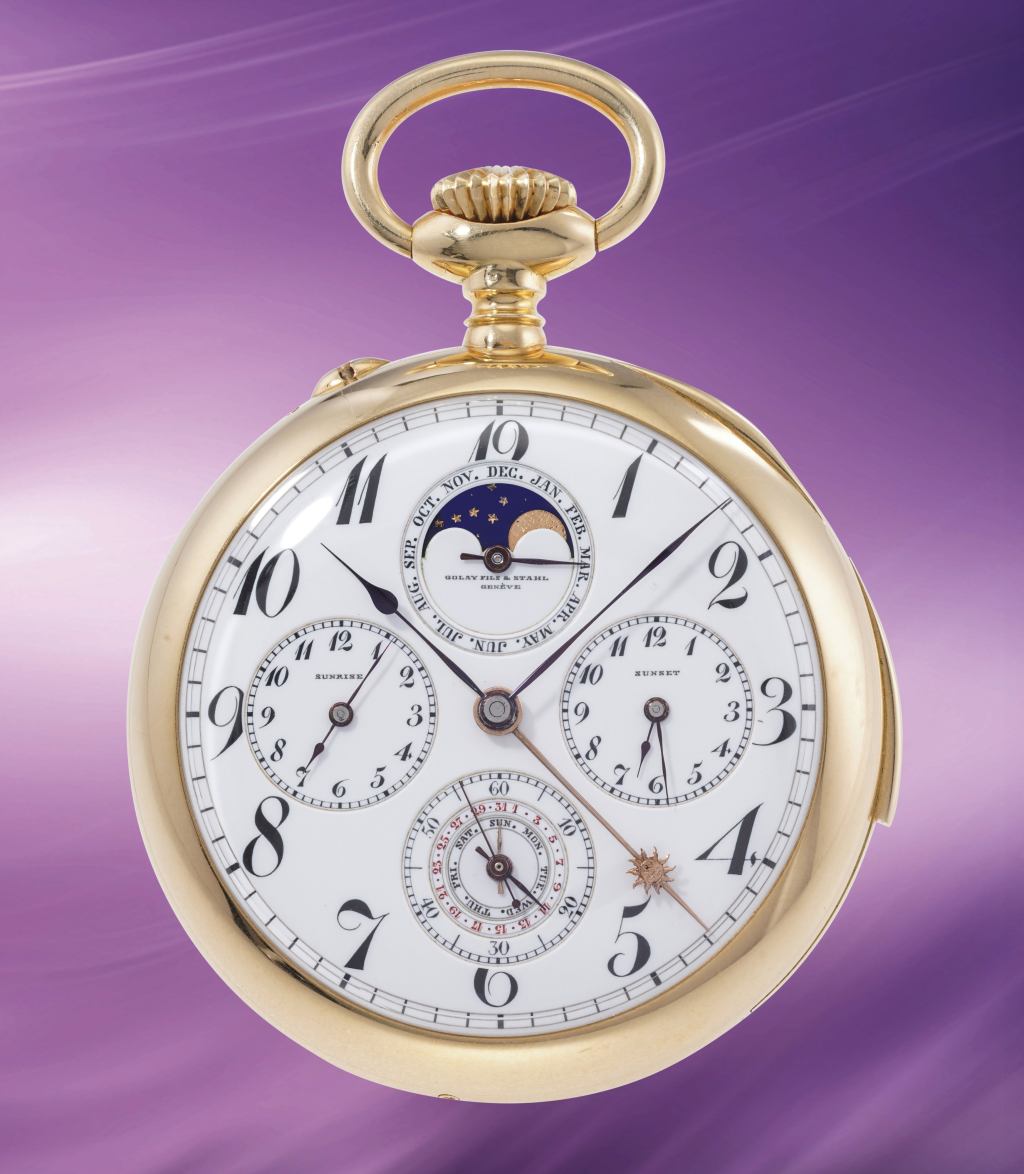
India, as we didn’t know yet, is a land of watches and timekeeping. 115 years ago, collector extraordinaire The Maharaja of Patiala in India commissioned a rather less talked about Swiss atelier to make a custom watch tailored for his personal use, marking his coming of age and starting of his rule. More than a century later the watch has appeared at auction after travelling three continents. This is the Golay Fils & Stahl Ref. 28’432 piece unique made of the Maharaja of Patiala. calibrated to the soul of a kingdom in northern India.
Over the last year or so, we have been hunting for a pocket watch personally used by Maharaja Sir Bhupinder Singh of Patiala (1891-1938) and specifically designed at his instructions.
The Establishment
Patiala was the largest and most important Sikh state belonging to the group known as the Phulkian States of the Punjab in India. The state was named after its founder Ala Singh and progenitor of the family Chaudhary Phool and had an illustrious history dating back to almost 14th century. The state came to be known as one of the most prominent ones in India when it rose during the expansion of the Sikh faith and the Sikh empire headed by Maharaja Ranjit Singh. Patiala and its subsidiary lands were and still are the cultural centre of Punjab and agriculture basket of India.
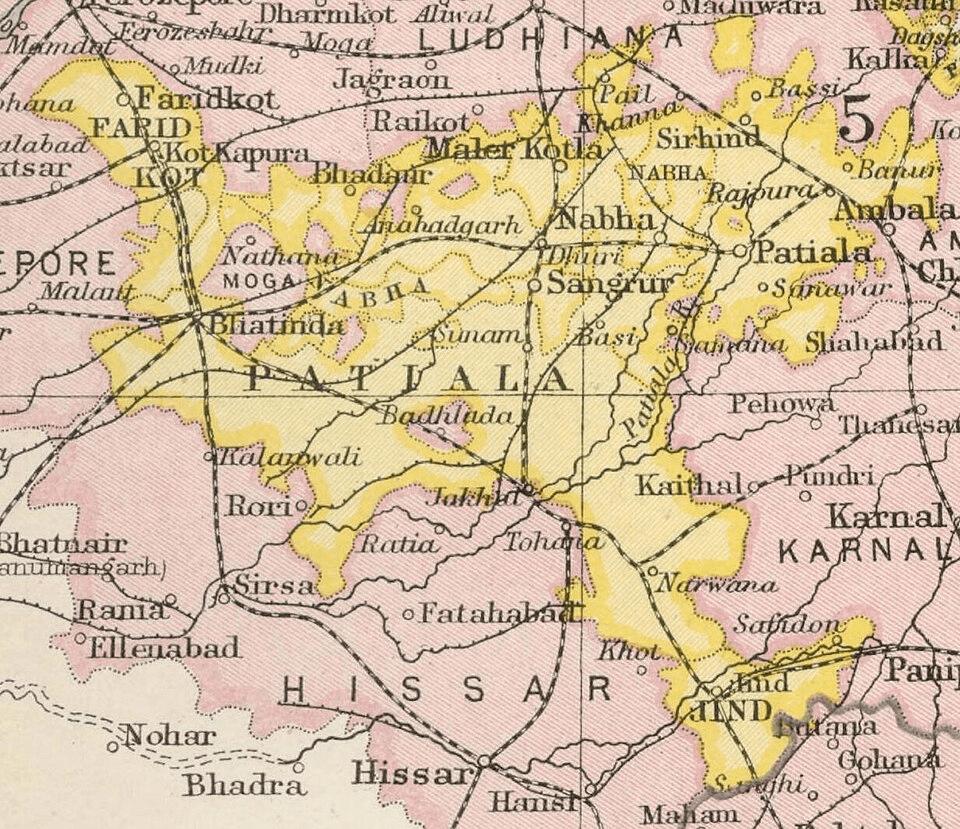
Kingdom of Patiala, 1931.
Amongst the line of its rulers was the 8th Maharaja (by title – 21st ruler of his dynasty) – Title meaning ‘great king’ in English, Maharaja Bhupinder Singh of Patiala (1900-1938) who was on of the most enlightened, able and vigorous yet highly extravagant, and without any doubt, the most versatile and liberal ruler of his times in India. He modernized the state’s administration, improved infrastructure, and was a major patron of sports, particularly cricket and polo. se rule if often referred as golden time of Punjab as India was on the crossroads of modernization. He was one of the major mediator amongst British and Native Indians as the head of Chamber of Princes and, in his limited power, always involved in politics and decisions of the day.

The young Maharaja of Patiala, Lieut.-Gen’l. H.H. Sir Bhupinder Singh, stands beside a throne holding a sword with both hands, wearing a decorated turban and numerous necklaces, in full Indian court dress.
Ruling, although natural didn’t come easy to him. Bhupinder Singh was born on 12 October 1891 in Moti Bagh Palace, Patiala. Singh was sent to the princely state of Dholpur, supposedly because of threats to his life due to intrigues in the Patiala court. He returned to Patiala in the beginning of 1900, only months before his father’s death.

An adolescent Maharaja Bhupinder Singh of Patiala with regents and officials, 1903.
At the age of 9, Singh succeeded as Maharaja of Patiala State upon the death of his father, Maharaja Rajinder Singh, on 9 November 1900. A Council of Regents ruled in his name until he took partial power shortly before his 18th birthday, on 1 October 1909, and was invested with full ruling powers on 3 November 1910. He would be known as one of the most visionary and controversial rulers of his time, his reign as one of the most progressive and although having the best collection of his time, perhaps the best in the world, remain relatively unknown to the watch world. Which changes today.
The Watch
While in his minority, Bhupinder Singh was under the tutelage of some excellent and exquisite tutors and nobles. The young man developed a taste of fine timepieces and jewellery so much so, a lot of jewellery houses, watchmakers and maisons use his pedigree as provenance of good faith and significance.
As soon as he came to power, he commissioned one of his first personal timepieces, perhaps the most complicated watch of the time to Swiss watchmaker Golay, Fils & Stahl, one of the most reputed from Geneva and personal watchmakers to Maharajah of Baroda who were fairy popular in India and had its branches through agents and visits to Durbars (courts).
To mark the new chapter of his life, investeture with full ruling powers of Patiala, Maharaja Bhupinder Singh, a young man of 22 commissioned highly complicated watches for special commissions such as an 18K gold openface minute repeating perpetual calendar watch with phases of the moon, sunrise, sunset and equation of time, made circa 1910 for the Maharaja of Patiala of India.
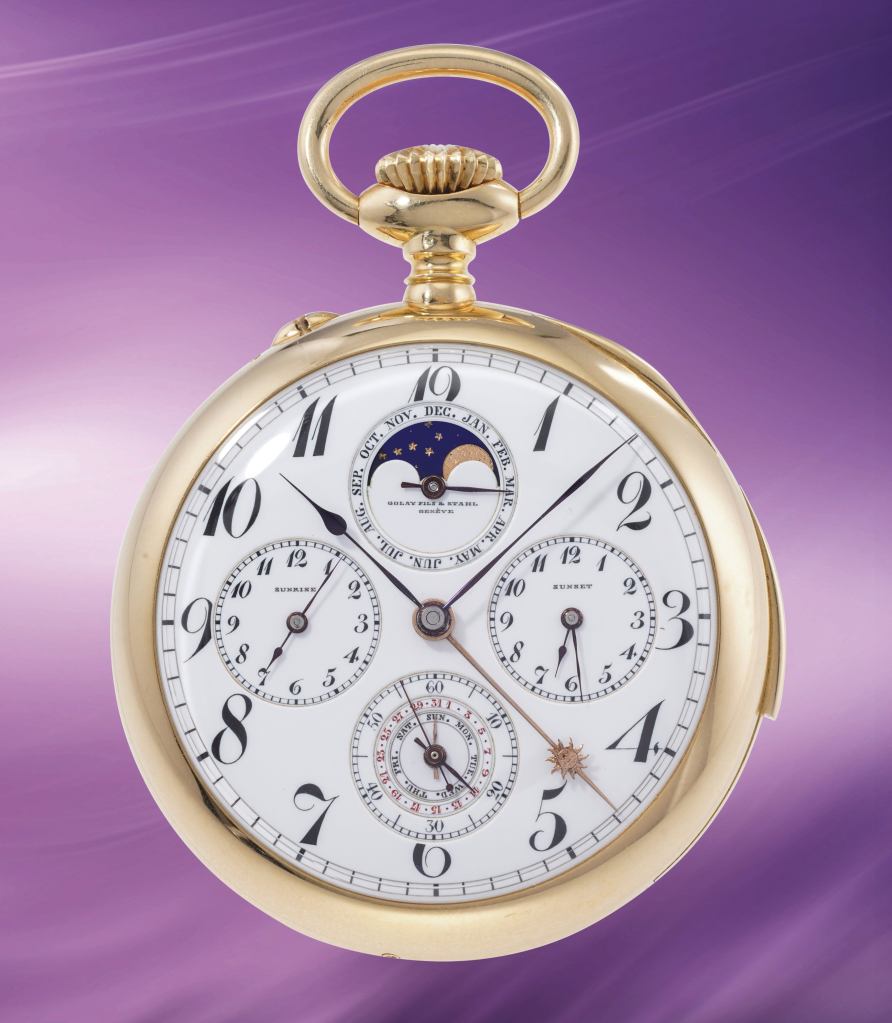
Golay,Fils & Stahl Ref. 28432 made for Maharaja of Patiala
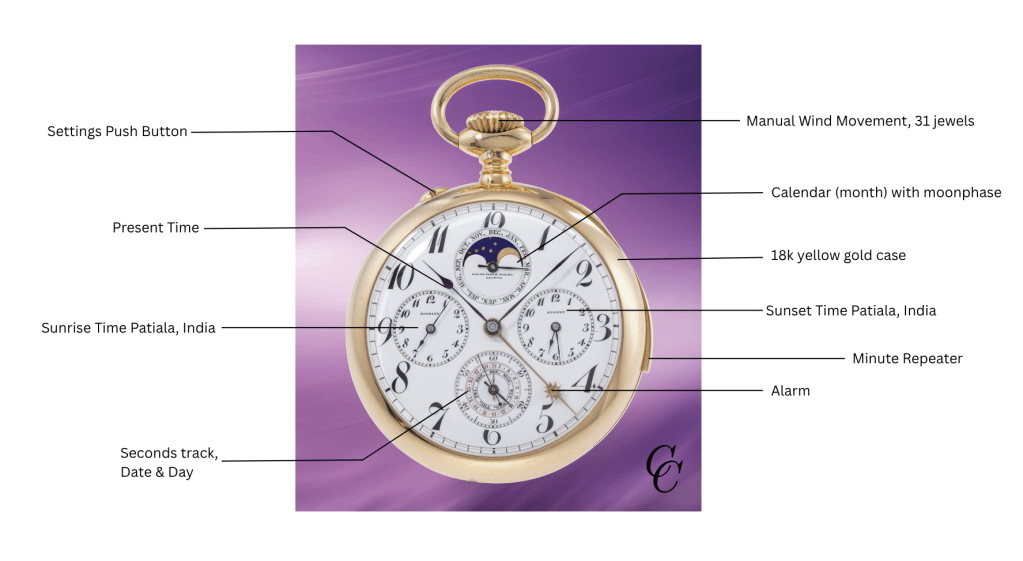
The complications of Golay, Fils & Stahl ref. 28432 performed for the
Maharaja of Patiala
The Equation of Time.
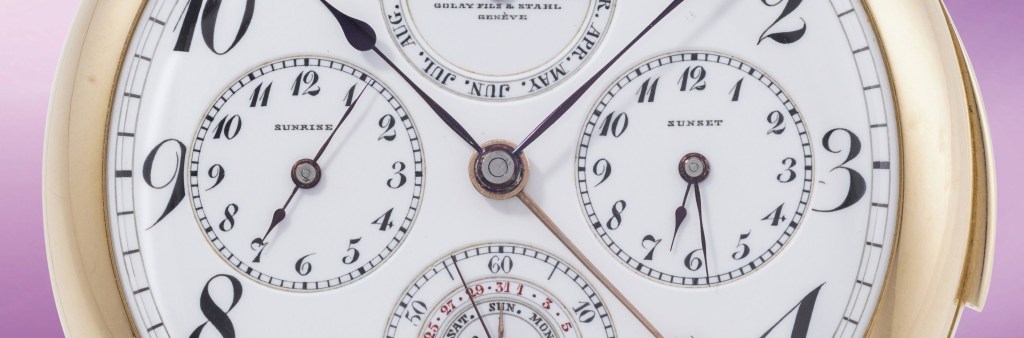
We are familiar with the complications of this watch as illustrated in the above explainer. Yet one complications remains, which the watch contains which is neither used a lot nor famous – The Equation Of Time.
The Equation of Time is the difference between apparent solar time (sundial time) and mean solar time (clock time), arising from Earth’s elliptical orbit and axial tilt. The subtle, profound discrepancy between mean time, the uniform beat kept by clocks, and apparent solar time, which answers to the actual motion of the Sun. It acts as a correction factor ranging roughly between (-16) and (+14) minutes, used to reconcile true solar noon with the uniform 24-hour day used by mechanical clocks.
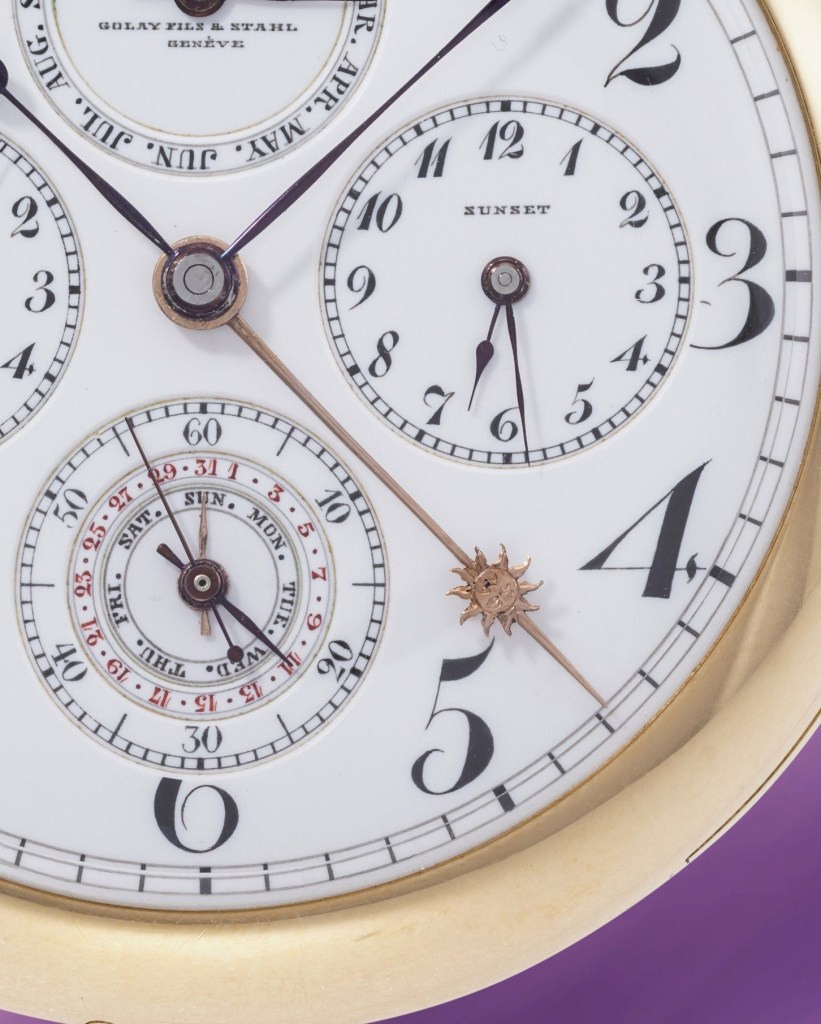
Central hand with engraved sun shows the true solar time or the directions of the movement of the sun.
This coherence is inseparable from geography. The watch is calibrated to the latitude of Patiala approximately 30.23° North – meaning its sunrise and sunset indications are mathematically valid for that city alone.

Old Moti Bagh Palace, Patiala – the seat and primary residence of the Maharaja
In the early twentieth century, such a device carried genuine practical weight. It was a portable solar almanac offering immediate knowledge of daylight duration and seasonal change without printed tables or court astronomers. For agricultural rhythms, specially in an agriculturally rich region like Patiala and Punjab, it revealed when usable light began and ended. For religious observance, it was still more precise. Within Hinduism and Sikhism, where ritual is keyed to exact solar moments – sunrise, true noon, sunset the Equation of Time permitted the wearer to correct mechanical time into cosmologically accurate time. Where daily prayers are oriented around the transitions of light, the watch offered a direct, independent reading of those thresholds.
It also speaks to a deeper cultural expectation as well as about the user – Maharaja Bhupinder Singh was an esoteric person, not sure how religious but as a ruler he was expected to know and follow the orders of his faith; that a ruler operates in harmony with the natural and celestial order. In traditional Indian thought, such alignment is emblematic of legitimate authority.
The very quality that makes the watch coherent also limits its range. It is either a bane or a boon. The watch can be set to other time but all it other functions stay true to Patiala. Say the Maharaja was travelling from India to the UK, the watch would still show him the mean time and true solar time of Patiala. The same is valid even during his travels across India – letting him know at what time to address his letter and say – at what time does produce move across villages or his queens travel from one place to another.
In essence – remove it from Patiala and its system remains internally consistent but externally wrong. Left unadjusted in another city, it continues to display the solar reality of home, functioning in effect, as a standing reference to a particular place on Earth. Adjusted to a new latitude(which is practically impossible), its sunrise and sunset indications lose their validity, and the elegance of the system fractures. Unlike world-time watches designed for the mobile age, this object resists universality. It privileges rootedness over flexibility, anchoring time firmly to place. The watch cannot act as a GMT watch.
Like a lot of watches commissioned by the Maharaja Patiala, this too features a perpetual calendar and moon phases – another essential complication for the rules, specially in India. Phases of moon define the bi-monthly dates of fasts in the Indic faiths. You don’t need to go out and see to determine whether you need to fast tomorrow or not.
Modern technology replicates all of these functions effortlessly. Smartphones compute solar position, display sunrise and sunset, and manage schedules with precision. But these capabilities are dispersed across multiple systems and largely invisible to the user. The coherence that defines the Patiala watch is its ability to present a unified, legible relationship between time, place, and the Sun is replaced by fragmentation and automation. The watch demands interpretation; it fosters awareness. Modern tools deliver answers without context.
But there is another question, why did the ruler choose these complications? Answered below.
Faith & Solar Timekeeping

In Sikhi and other Indic traditions, time has historically been understood not merely as a mechanical measurement, but as a sacred rhythm connected to nature, spirituality, and divine order. Before the widespread use of clocks, life in Punjab followed the movement of the sun, with prayer, labor, and daily activity structured around dawn, midday, sunset, and nightfall.
Sikh devotional practices such as Nitnem naturally reflected this solar rhythm. Amrit Vela, the pre-dawn period considered ideal for meditation and remembrance of the divine, was defined not by numerical precision but by the atmosphere of transition between darkness and light. In this worldview, the sundial became more than a scientific instrument; it symbolized humanity’s alignment with cosmic order and the flow of creation.
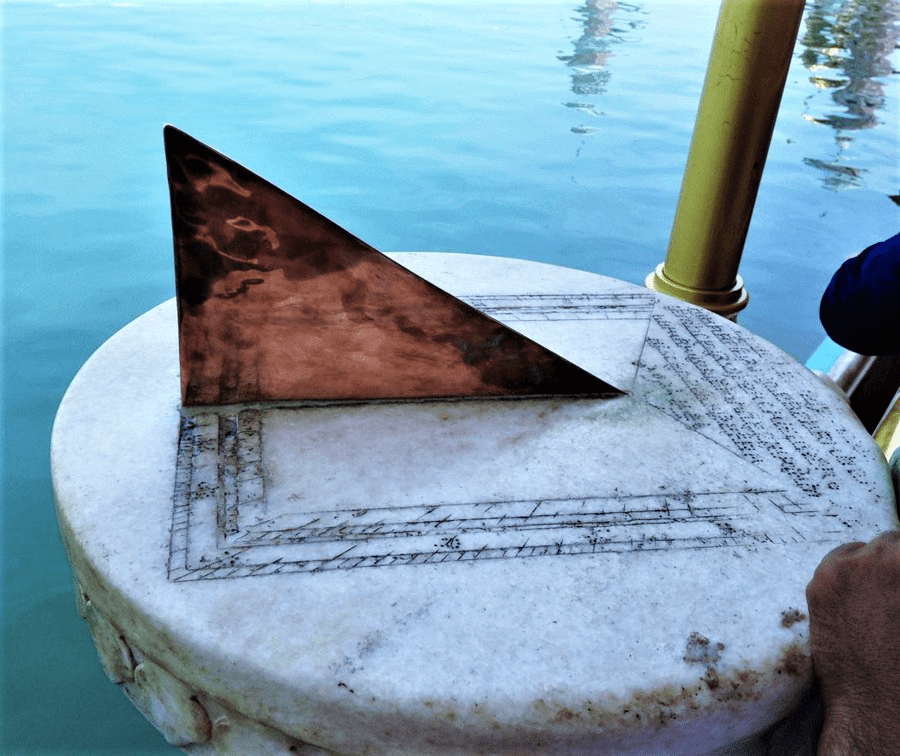
This relationship between spirituality and solar timekeeping is beautifully represented by the historic sundial associated with Sardar Lehna Singh Majithia at Golden Temple. A prominent noble and intellectual in the court of Maharaja Ranjit Singh, Lehna Singh Majithia was the was a polymath, inventor, warrior, and statesman and the governor of the holy city of Amritsar was deeply interested in astronomy, mathematics, and scientific instruments. His work reflected the intellectually progressive spirit of the Sikh Empire during the nineteenth century, where scientific inquiry and spiritual consciousness coexisted harmoniously.
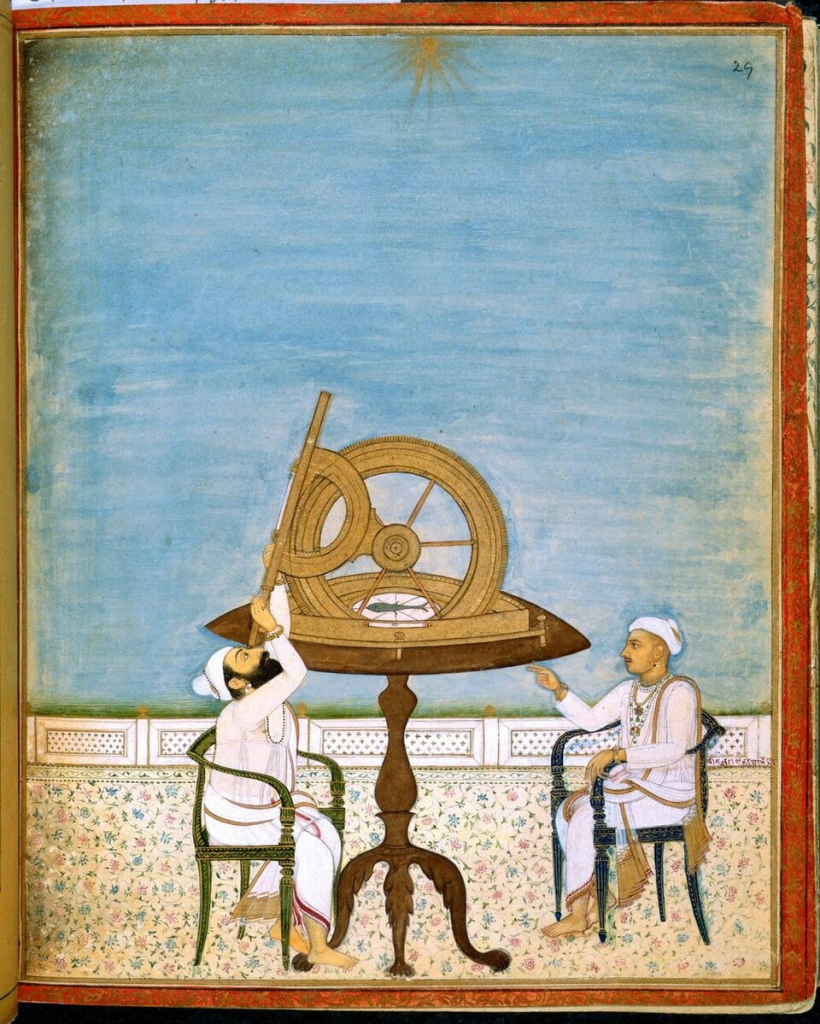
Sardar Lehna Singh Majithia stargazing with a telescope accompanied by an astrologically inclined pundit
The sundial near the Golden Temple was not simply a practical device used to determine local (solar) time; it held symbolic and philosophical significance. Before accurate mechanical clocks became common, such instruments helped regulate daily routines and communal religious activity.
Unlike mechanical clocks, which produce uniform and abstract time through gears and springs, the sundial depended entirely on sunlight and the earth’s movement. It revealed time directly through nature itself. In Sikh thought, this carried profound meaning, reflecting Hukam – the divine order governing existence. Even after colonial modernity introduced standardized clocks and mechanical watches, Sikh spirituality retained traces of this older solar consciousness. The sundial of Lehna Singh Majithia therefore remains a powerful symbol of a period when faith, astronomy, philosophy, and horology existed in remarkable harmony.

Sardar Lehna Singh Majithia’s Dhup Garhi or Sun Clock installed at the Golden Temple during his governance.
From these instances, it becomes clear why solar timekeeping held such significance and why Maharaja Bhupinder Singh chose to commission a watch of precisely this complication.
The Watchmaker – Léon Aubret
Arguably, the most critical part of the watch as it was the expressed in the request of the client was the astronomical complications, that were left to master watchmaker Léon Aubert. Much of Aubert’s life story is known thanks to documentation by noted Vallée historian Daniel Aubert (whose four volumes on the valley are must-haves for history lovers, though only available in French).
In the words of Hodinkee; Aubert was responsible for the astronomical complications on another notable English-delivered, Swiss-made watch, the Dent 32’573 (sold at Sotheby’s in 2020 for CHF 800,000), which formerly belonged to notable Boston-based collector of important English watches Elliot Cabot Lee (who died in 1920). Cabot Lee was essentially the Henry Graves or James Ward Packard of English watchmaking commissions at the time; however, many of his watches still relied on Swiss work and parts.
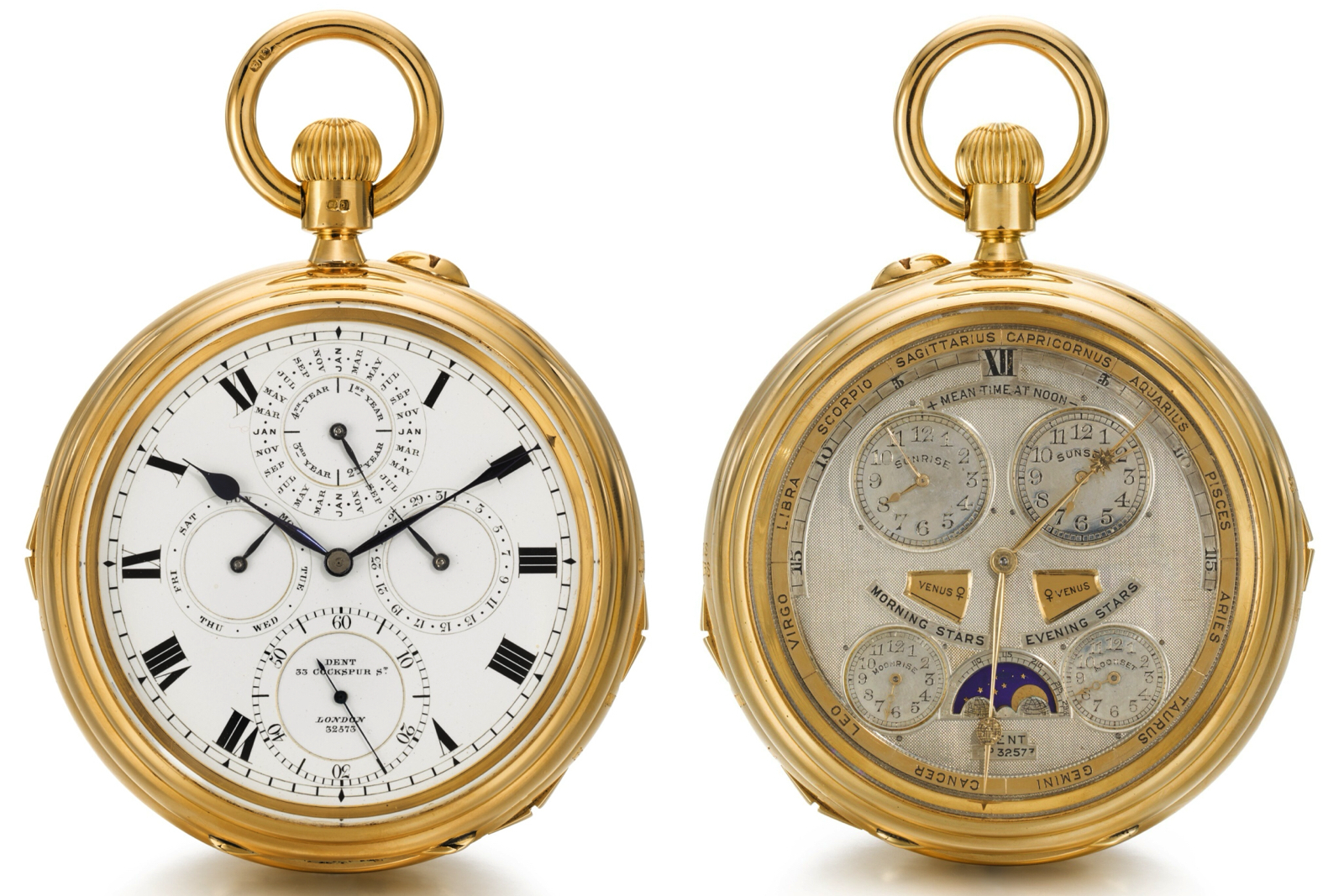
The Dent 32’573 from the collection of Elliot Cabot Lee
Aubert died the same year as Cabot Lee, after nearly 50 years working in his workshop (established in 1872) in Le Brassus. During his lifetime, he invented a new mechanism for the equation of time complication, which he sold to brands like Patek Philippe. That included Patek Philippe’s Ref. No.111’505 and another Patek Phillipe Ref. 198’023, made with his apprentice Paul Auguste Golay.
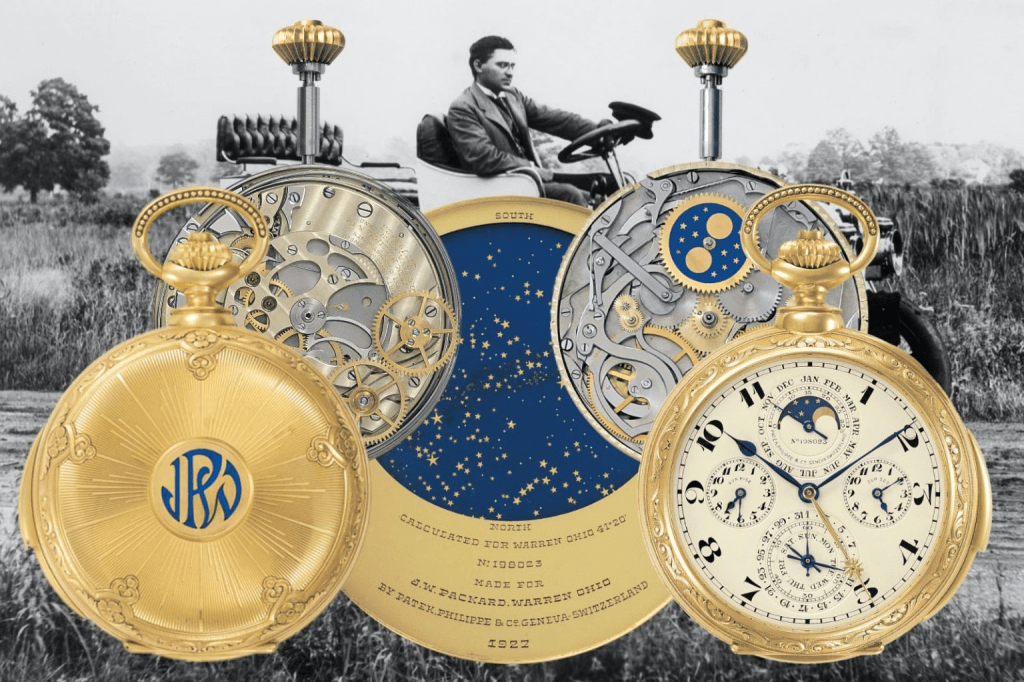
Patek Philippe “The Packard” no. 198’023 double-faced with 10 complications completed in 1927. Image – Patek Philippe/collage
He then created another such mechanism for Golay Fils & Stahl, numbered 28,432, which was sold at Sotheby’s Geneva in 1992. That watch was made for the Maharaja of Patiala and featured a perpetual calendar, minute repeater, sunrise and sunset indicators, and moon phases.
In short, Aubert was the man for the job.
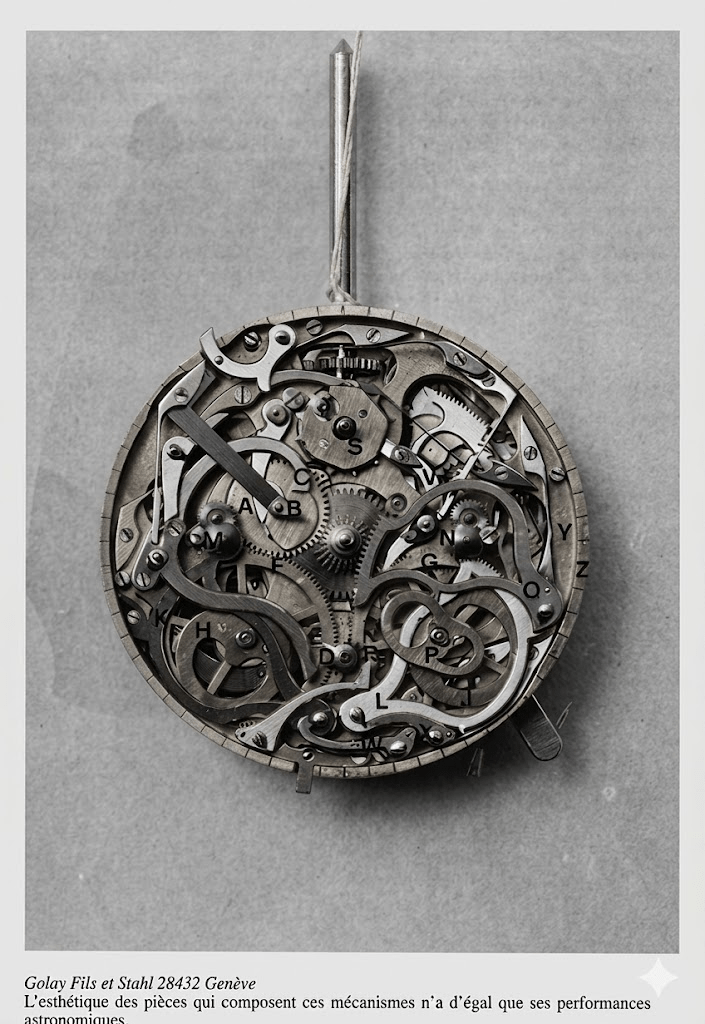
The picture of movement of the Patiala watch published in a French magazine, circa 1987.
So where was the Golay Fils & Stahl Pocket Watch numbered 28,432? We looked through all the Sotheby’s Geneva Catalogues and later discovered that it had been sold to a small French museum in 1992. So we wrote to the museum – would they be able to give us current pictures of the watch? We received a non-committal reply. It didn’t seem like we were going to get our pictures or archives anytime. Whether our asking about the watch set off some kind of thinking in that French Museum or they themselves discovered they had an extraordinary watch, we will never know.
Low and behold, the watch turned up in the Phillips Auction XXIII to be held in Geneva on May 9, 2026! There was no doubt that this was the watch as it had al the mentioned complications and was numbered 28,432. And we got what we were looking for over a year!
Maison Golay Fils & Stahl

Auction house Phillips describe them as; “Founded in 1837 by the watch and clock maker Auguste Golay-Leresche at 31, Quai des Bergues in Geneva, the family run company specialized in the production of high quality watches for which they won various medals and awards. They quickly became an important asset to Geneva’s economy and were recognized as one the best watch manufacturers of Switzerland, both nationally and internationally.”
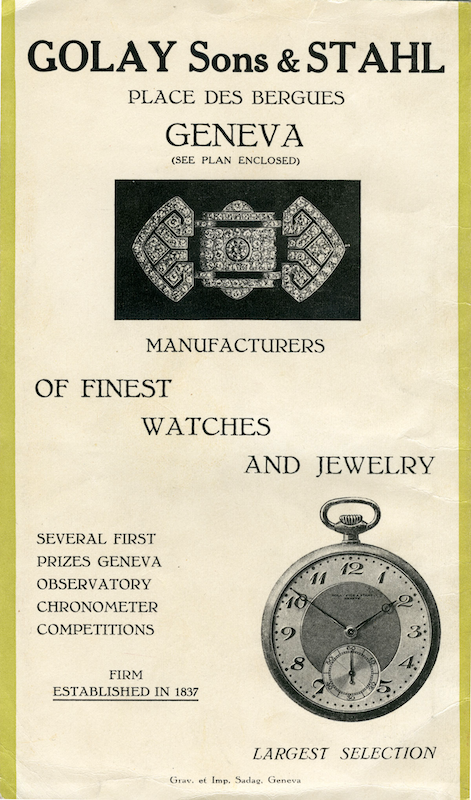
In the period from 1860 until 1930 there were two stores, the original in Geneva and one in Paris. At the end of the 19th centruy, it counted King Carol I of Romania among its most loyal customers and the firm became jewellers to the Royal Family of Romania. Other royal customers included Maharaja Kim Damrong of Siam and the Maharajah of Baroda of India.
The commission from Bhupinder Singh of Patiala was the most technically ambitious expression of this relationship. That the Patiala watch drew on the same pool of talent as the holy trinity (AP,PP & VC) speaks to both the ambition of the commission and the stature Golay Fils & Stahl commanded within Geneva’s watchmaking world.
SJX Watches wrote a fantastic article going deep on the watchmaker/retailer.
Read: https://watchesbysjx.com/2020/02/golay-fils-stahl-geneva.html
Collector Extraordinaire
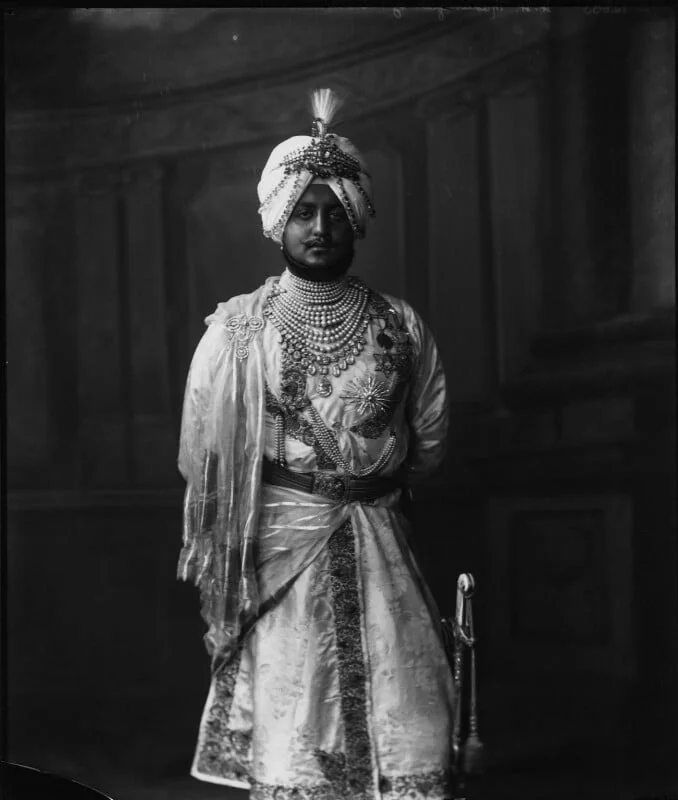
European watchmaking had found early and enthusiastic patronage among India’s ruling elite, for whom timepieces were not mere instruments but declarations of taste, intellect, and global stature i.e extensions of self that fused craftsmanship, culture, and personal charisma. Indian rulers often fused local craftsmanship and beliefs with their jewellery and watches as we just saw in this particular example.
Maharaja Bhupinder Singh was a seasoned enthusiast, who commissioned, and collected with the eye of a genuine connoisseur. We consider him as collector extraordinaire, a title obtained by select few in the society for his many firsts and exceptional commissions which held the maisons in awe, the orders which the brands boast about till this day.

The famous Vacheron Constantin Patiala ‘Kada’ watch – 1/1 made for either the Maharaja or the Maharani (unisex).
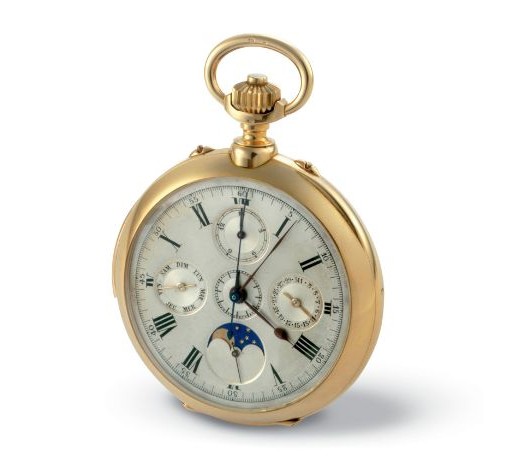
Vacheron Constantin – Personal watch of Maharaja of Patiala who custom ordered it with an alarm function.
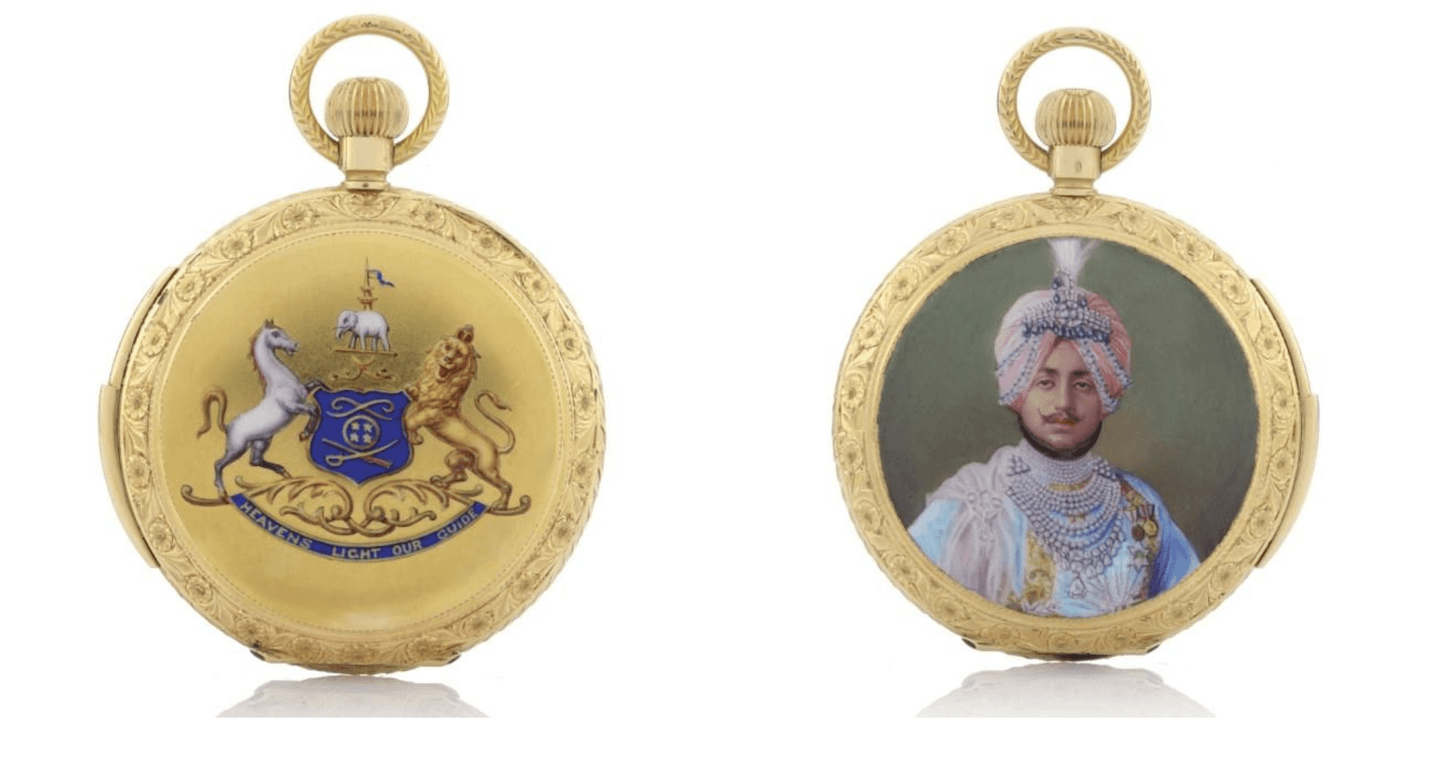
Watches commissioned to various watchmakers to be given off as gifts by the Patiala Durbar.
The Maharaja of Patiala’s was one of the earliest clients to purchase the Tank à Guichets in 1928 and Cartier Helm watch. He also had an elaborate relationship with Cartier to whom he commissioned the famous Patiala Necklace.
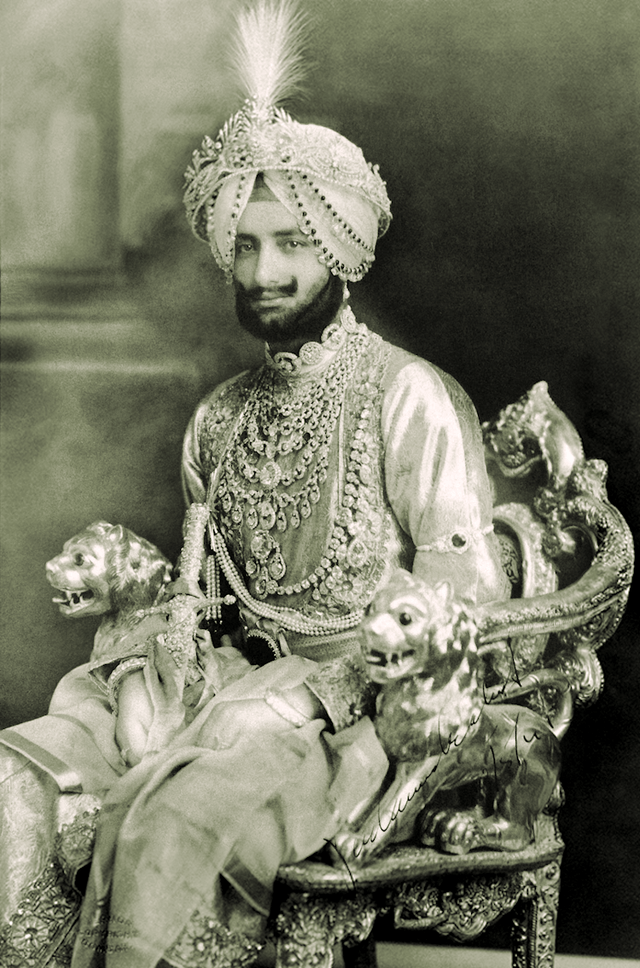
The Patiala Necklace last worn by his son and successor Maharaja Yadavindra Singh of Patiala.
End.




Leave a comment